

Key Development
On August 10, 2026, Deputy Prime Minister Pham Thi Thanh Tra, acting on behalf of the Prime Minister, officially signed Decision No. 1515/QD-TTg, approving the National Master Plan for “Pre-Hospital Emergency Care (PHEC) System Development 2026 – 2030”. The executive order establishes pre-hospital emergency care as a vital frontline tier of the national health system, mandating a modernized, interconnected, and standardized emergency response framework nationwide.
Core Performance Targets & Execution Milestones Through 2030:
-
Critical Emergency Response Lead Time: Dispatching specialized ambulances within under 05 minutes from the dispatch decision for critical emergency presentations. 100% of emergency calls processed, triaged, and coordinated in real-time.
-
Ambulance Standardization Benchmark: Securing a density of at least 01 standardized ambulance per 100,000 population. 95% of emergency transportations executing pre-hospital data integration with receiving clinical facilities.
-
National Digital Management Platform: Complete construction of the National PHEC Digital Platform in 2026, achieving full operational commissioning by 2027. The platform will interoperate directly with the integrated emergency response hotline matrix 113 (Police), 114 (Fire & Rescue), and 115 (Medical) managed by the Ministry of Public Security.
-
Unified Inter-Agency Command Structure: Municipal and Provincial Police Command Centers will serve as centralized dispatch hubs coordinating cross-agency assets (Health, Police, Military, Fire/Rescue, and local government units).
-
Workforce & Community First-Responder Training: At least 75% of primary health workers at commune stations trained in advanced pre-hospital care. First-aid literacy expanded across at least 3% of the population (minimum 1% practical certified). Ministry of Education & Training will integrate first-aid curricula into secondary school education.
-
VHI Reimbursement Integration: Phasing Voluntary Health Insurance (VHI) Fund coverage for pre-hospital emergency services and transport, aligned with premium adjustments, alongside transport subsidies for vulnerable social cohorts.
Why It Matters
-
Optimizing Pre-Hospital Golden Hour Survival: Historically, traffic accidents, acute stroke, and trauma management encountered critical pre-hospital delays due to fragmented communication between medical 115 hotlines and 113/114 public safety dispatchers. Mandating dispatch under 5 minutes and unifying 113–114–115 protocols maximizes survival rates during the golden hour.
-
Transitioning to Inter-Agency Command Dispatch: Designating Police Command Centers as unified dispatch hubs leverages public safety command infrastructure, enabling rapid traffic clearing and multi-agency resource deployment to assist medical crews accessing emergency scenes.
-
Reimbursement Reform for Pre-Hospital Care: For the first time, pre-hospital emergency care and ambulance transport are formally scheduled for VHI Fund reimbursement. This policy protects vulnerable demographics from sudden out-of-pocket medical expenditures during acute health crises.
Healthcare Insight Analysis
From the perspective of Healthcare Insight, Prime Ministerial Decision 1515/QD-TTg executed on August 10, 2026, marks a structural milestone: Integrated Pre-Hospital Emergency System.
Prior to Decision 1515, Vietnam’s 115 emergency network faced three operational bottlenecks: a deficit of standardized resuscitation ambulances, public telecommunications congestion during emergency surges, and receiving emergency departments lacking real-time pre-arrival patient data.
Decision 1515 systematically resolves these structural gaps via three operational pillars:
-
Connected Pre-Hospital Telemedicine: Requiring 95% of emergency transports to transmit real-time telemetry (ECG, SpO2, vitals) to receiving emergency rooms prior to arrival. Clinical teams can initiate remote consultation and prepare cath labs or surgical suites before the patient enters the hospital.
-
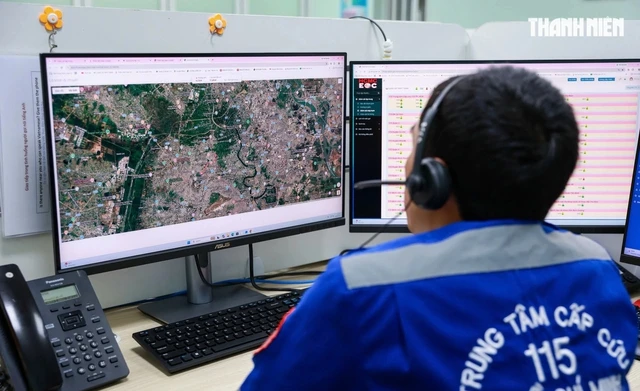
Unified 113–114–115 AI Dispatch Platform: Implementing AI and Big Data analytics across the National PHEC Platform (operational in 2027) enables automated caller geolocation, satellite GPS routing for nearest response vehicles, and traffic congestion mitigation.
-
Expanding Community First-Responder Capacity: Training 75% of commune health staff and integrating first-aid skills into secondary schools establishes a nationwide tier of immediate first responders capable of executing CPR and hemorrhage control prior to ambulance arrival.
Market Implications
-
Procurement Surge in Specialized Ambulances & Medical Devices: Achieving 1 ambulance per 100,000 population will trigger public and private procurement tenders for thousands of standardized mobile ICUs equipped with portable ventilators, defibrillators, and multi-parameter monitors.
-
Opportunities for Digital Health & IoT Integrators: Enterprise tech providers (Viettel, VNPT, FPT) gain opportunities to compete for national dispatch infrastructure tenders, GPS telemetry software, and real-time medical IoT device integration.
-
Stimulating Private Emergency Medical Services (PPP): VHI reimbursement coverage and private sector incentives will encourage private hospital networks and commercial ambulance operators to integrate into the national 115 network.
National Pre-Hospital Emergency Care Matrix (Decision 1515/QD-TTg)
| Performance Benchmark | 2030 Statutory Target | Primary Lead & Coordinating Agencies |
| 63-Province PHEC Coverage | 100% of provinces/cities deploy network & protocols. | MOH, MPS, Provincial People’s Committees. |
| Critical Dispatch Lead Time | $\le$ 05 Minutes from dispatch directive. | Police Command Centers & 115 Dispatch Network. |
| Ambulance Fleet Density | Minimum 01 standardized unit / 100,000 pop. | Ministry of Health & Provincial Government. |
| National Digital Platform | Built in 2026; operational launch 2027. | MOH interoperating with MPS 113-114-115 Platform. |
| Pre-Arrival Hospital Data | 95% of transports transmit pre-arrival data. | Ministry of Health & Receiving Hospitals. |
| VHI Reimbursement Coverage | VHI Fund progressively covers PHEC services. | MOH, Ministry of Finance, Vietnam Social Security. |