

Key Development
Ninh Binh is restructuring its healthcare capacity around a broader objective: enabling more patients to receive advanced treatment locally rather than automatically moving up the referral chain. Following organizational restructuring, the provincial health system includes 55 units, with 18 medical centers reorganized as general hospitals to consolidate resources and expand clinical capabilities across different areas.
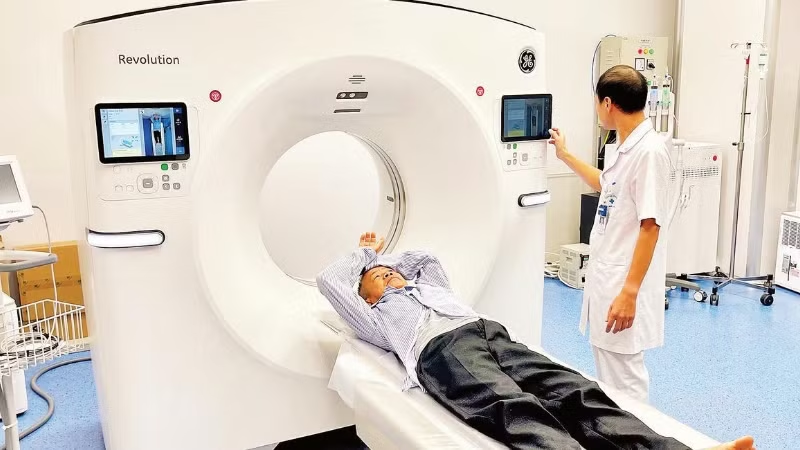
The investment extends beyond hospital buildings. Nam Dinh General Hospital has opened a new facility with more than 1,000 beds and deployed technologies including a 128-slice CT scanner, 3.0-Tesla MRI, 4K laparoscopic systems and equipment supporting increasingly complex surgery, critical care, cardiology and oncology. Ninh Binh Obstetrics and Pediatrics Hospital is meanwhile expanding genetic screening, diagnostic imaging and minimally invasive treatment while using remote consultations for difficult cases.
By 2030, the province intends to develop three hospitals toward advanced technical-care status and another toward a comparable level. Plans include kidney and liver transplantation, IVF, cardiac surgery, neonatal ECMO and higher-complexity cancer treatment.
Why It Matters
- Referral reduction is increasingly a measure of system capability. Treating complex cases closer to patients can lower travel burdens while allowing national referral hospitals to concentrate resources on cases requiring the highest level of expertise.
- Healthcare capital expenditure is moving deeper into provincial markets. Advanced imaging, surgery, oncology, laboratory medicine and critical-care infrastructure create downstream demand for maintenance, consumables, software and clinical training.
- Human capital determines whether technology delivers value. Nam Dinh General Hospital aims for 50% of its clinical physicians to hold postgraduate qualifications in 2026, illustrating that equipment investment must be matched by specialist capability.
- Digital infrastructure is becoming part of clinical capacity. Ninh Binh is pursuing electronic medical records, electronic health records, teleconsultation and AI applications alongside physical expansion.
Healthcare Insight Analysis
The strategic story is not that a provincial hospital has acquired another MRI scanner or mastered another complex procedure. It is the changing role of provincial hospitals within Vietnam’s healthcare architecture.
Vietnam’s 2023 Law on Medical Examination and Treatment introduced a three-level technical classification system, with the relevant provisions taking effect on January 1, 2025. Amendments to the Health Insurance Law similarly align patient registration and transfers more closely with technical capability rather than relying only on the traditional administrative-tier framework.
This creates room for capable provincial institutions to evolve into regional clinical hubs. In Ninh Binh, the local presence of major institutions including Bach Mai Hospital and Viet Duc University Hospital provides additional infrastructure for training, specialist consultation and technology transfer.
Yet purchasing advanced equipment does not automatically produce advanced care. Sustainable capability emerges only when technology, specialists, clinical volume, protocols, data systems and referral networks are developed together.
Vietnam’s long-running technology-transfer programs illustrate this principle. By 2023, Bach Mai Hospital reported that it had trained and transferred techniques to around 1,000 healthcare facilities, reaching nearly 300,000 trainees over 15 years of the Project 1816 program.
The implication is important for healthcare executives: provincial upgrading should be understood less as a procurement cycle and more as a multi-year capability-building process.
Market Implications
For medtech and healthcare-service providers, the trend expands the addressable market beyond Hanoi and Ho Chi Minh City toward emerging provincial healthcare hubs, particularly in imaging, critical care, interventional cardiology, oncology, diagnostics and minimally invasive surgery.
For hospitals, competitive differentiation will increasingly depend on retaining specialist physicians, maintaining sufficient procedure volumes, demonstrating clinical quality and integrating data across the patient pathway — not simply expanding bed capacity.
At the system level, Ninh Binh illustrates a broader transition: strengthening provincial healthcare is evolving from a hospital-decongestion strategy into a model for bringing advanced clinical capability materially closer to patients.
Source: https://nhandan.vn/nang-cao-chat-luong-kham-chua-benh-y-te-tuyen-tinh-post988730.html