

Key Development
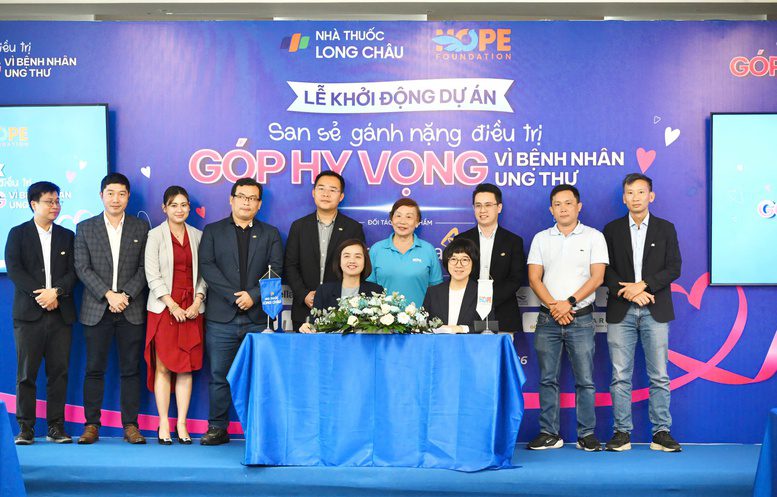
On September 16, 2026, Long Chau Pharmacy and Vaccination System, HOPE Foundation and pharmaceutical partners launched the “Sharing the Burden for Cancer Patients” program to mobilize resources for patients facing financial hardship during cancer treatment. Under the model, HOPE Foundation receives patient applications, coordinates with hospitals to verify eligible cases and administers financial support, while Long Chau acts as a connector between pharmaceutical partners, the foundation and the wider community.
One distinctive feature is the integration of Long Chau’s customer ecosystem. Customers can convert accumulated loyalty points into contributions for cancer patients, while donation information is intended to be updated in real time. The initiative builds on a 2024 Long Chau–HOPE Foundation program that raised more than VND1 billion to support 48 children with cancer and congenital heart disease.
The program enters a market where the underlying need is substantial. GLOBOCAN 2022 estimated 180,480 new cancer cases and 120,184 cancer deaths in Vietnam, with more than 409,000 people living within five years of a cancer diagnosis.
Why It Matters
- Financial toxicity is part of the cancer journey. Vietnam’s Ministry of Health has cited hospital data indicating average cancer-treatment costs exceeding VND176 million per patient annually, with patients themselves carrying a substantial share of expenditure. Financial capacity can therefore affect whether treatment can be sustained.
- Patient support is becoming more structured. Rather than relying solely on isolated charitable donations, the model combines patient verification, hospital involvement, corporate contributions and community fundraising.
- Retail healthcare can become an access layer. Pharmacy networks have frequent contact with patients and consumers, potentially allowing them to connect resources across the healthcare ecosystem in ways that hospital-based programs alone cannot.
- Transparency can support scalability. Real-time visibility of contributions may help turn episodic fundraising campaigns into longer-term community participation.
Healthcare Insight Analysis
The strategic significance of the initiative is not the initial amount of money raised. It is the architecture through which resources are identified, pooled and directed toward patients.
In oncology, access is often discussed primarily in terms of regulatory approval, reimbursement or formulary inclusion. Yet the patient’s real-world definition of access is broader. Patients must remain able to pay for medicines, diagnostics, transportation, repeated hospital visits and other expenses throughout a treatment journey that may last months or years.
This is where financial toxicity becomes a healthcare issue rather than simply a social-welfare concern.
Vietnam’s Ministry of Health reported that cancer medicines accounted for VND7.521 trillion in Health Insurance Fund spending in 2023, among the largest pharmaceutical expenditures borne by the fund. At the same time, despite national health-insurance coverage exceeding 94%, the Ministry has continued to identify household out-of-pocket spending of above 40% as a financial-protection challenge, particularly for chronic and long-duration conditions.
The Long Chau–HOPE model is therefore notable because it introduces a complementary financing layer. It does not replace public insurance; it operates around residual financial gaps that can still determine whether vulnerable patients remain in care.
Each participant contributes a different capability. Hospitals help validate clinical circumstances. HOPE Foundation provides a mechanism for assessing and distributing support. Pharmaceutical and other partners contribute resources. Long Chau brings a consumer-facing healthcare network capable of mobilizing a much broader community.
The loyalty-point mechanism is particularly interesting from an ecosystem perspective. It converts a conventional retail engagement tool into a micro-donation channel, potentially lowering the friction associated with charitable participation.
If governance, patient-selection criteria and transparency remain robust, the longer-term value could extend beyond fundraising. The model could evolve toward a repeatable patient-support infrastructure that may eventually be adaptable to rare diseases and other high-cost chronic conditions.
Market Implications
For pharmaceutical companies, structured patient-support programs are likely to become increasingly relevant to market-access strategies in oncology, rare disease and other expensive therapeutic areas. Clear governance and separation from prescribing decisions will remain critical.
For pharmacy chains, the opportunity extends beyond medicine distribution toward becoming a healthcare access platform, linking patients with education, adherence support, financing resources and social programs.
For payers and policymakers, philanthropic programs cannot substitute for comprehensive financial protection, but they can reveal where residual affordability gaps remain and which patient populations experience them most acutely.
For the broader healthcare ecosystem, the message is increasingly clear: medical innovation creates meaningful value only when patients can enter — and remain on — the treatment pathway.