

Key Development
Con Dao already has a 60-bed medical center built with more than VND247 billion in investment. The unresolved constraint is specialist capacity and the ability to manage serious cases without depending on evacuation by sea or air. That makes Ho Chi Minh City’s latest proposal more consequential than a conventional hospital expansion.
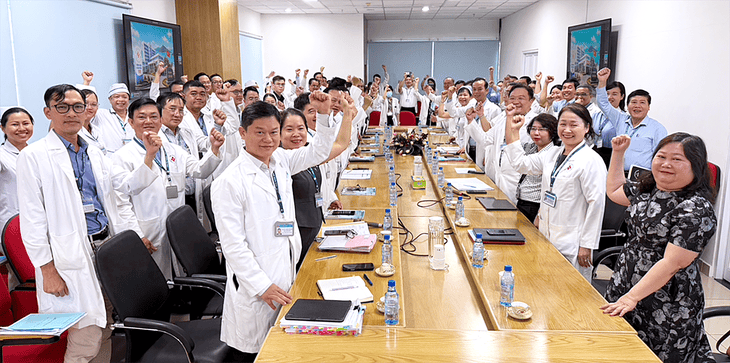
On September 20, 2026, the HCMC Department of Health said the city government had instructed it to review and advise on the proposed merger of Con Dao’s Military-Civilian Medical Center into People’s Hospital 115, preparing the way for a second campus of the tertiary hospital on the island. The available announcement represents a preparatory step; a final merger decision was not reported in the source article.
The proposed model would move beyond reliance on rotating specialists. Primary care and population-health management would remain with the local health station. Hospital 115’s island campus would handle emergencies and cases beyond primary-care capability, while highly complex patients could be supported through teleconsultation or transferred through a predefined tertiary network in HCMC.
Why It Matters
- This is a governance change, not simply a staffing increase. Rotating physicians can fill temporary gaps. Permanent responsibility by a tertiary institution allows staffing, protocols, training, supplies and escalation pathways to be managed as one system.
- Geography turns time-to-treatment into the critical performance metric. In stroke, trauma, obstetric emergencies and critical illness, the problem on an island is not only availability of care. It is the clinical time lost before the patient reaches definitive treatment.
- Physical infrastructure already exists; human capability determines utilization. The current center sees more than 25,000 outpatient visits annually, performs 200–300 surgeries and around 3,000 procedures, yet specialist shortages have remained a major constraint.
- Healthcare infrastructure is also tourism infrastructure. Con Dao’s medical system serves residents, fishermen, government personnel, military forces and tourists. Reliable emergency capacity therefore contributes to the operating resilience of an island economy that continues to expand its tourism infrastructure.
Healthcare Insight Analysis
Healthcare Insight’s view is that the wrong benchmark would be to ask whether Con Dao can eventually replicate a smaller version of a mainland tertiary hospital.
It probably should not.
The island is unlikely to generate enough volume across every subspecialty to economically or clinically justify permanent high-complexity capacity. Low utilization raises equipment costs per case and, more importantly, makes it difficult for clinical teams to maintain proficiency in rarely performed procedures.
The stronger model is a distributed hospital network.
Physical capacity on the island should concentrate on conditions for which geographic delay is most dangerous: emergency and intensive care, trauma, selected acute medicine, safe obstetric care, imaging, laboratory services, blood availability and stabilization before transfer.
Low-volume advanced procedures can remain connected to the mainland through telemedicine, scheduled specialist rotations and predefined referral pathways.
People’s Hospital 115 is strategically aligned with this approach. It is a 1,600-bed, top-tier general hospital within HCMC’s health system, with major capabilities in emergency and critical care, neurology and stroke, cardiology, nephrology-urology and vascular intervention.
But there is an execution risk that deserves more attention: a second campus can redistribute scarce clinical talent rather than create it.
Sending specialists to Con Dao is relatively straightforward. Maintaining sustainable rosters, professional development, housing, incentives, backup coverage and equivalent quality between two geographically separated sites is much harder.
Con Dao is also developing the preventive end of the pathway. In 2026, the island received a GSP-standard vaccine cold-storage system and vaccine-support program, while HCMC selected Con Dao among the first areas for its population health-screening initiative.
The emerging architecture is therefore broader than one hospital: community prevention → primary care → island acute care → mainland tertiary expertise.
That is a more scalable model than simply adding specialist departments.
Market Implications
Hospitals and healthcare workers: Hospital 115 gains an opportunity to test a genuine hub-and-spoke delivery model, but carries substantial workforce, logistics and quality-management risk.
Medtech and digital health: the strongest demand is likely to be in point-of-care diagnostics, imaging, ICU technology, telemedicine, remote support and highly reliable equipment rather than low-volume advanced machinery.
Pharma and supply chain: emergency medicines, blood products, vaccines and temperature-controlled inventory require more deliberate stock management because replenishment cannot be treated like mainland logistics.
Payers and regulators: success should not be judged only by patient volumes. More meaningful metrics include avoidable transfers, emergency cases successfully managed on-island, presentation-to-definitive-treatment time and the proportion of transfers that are planned rather than urgent.
If those indicators improve, Con Dao could demonstrate an important principle for remote healthcare: bringing advanced care closer to patients does not require reproducing an entire tertiary hospital. It requires designing a network in which geography no longer determines clinical outcome.
Source: https://tuoitre.vn/benh-vien-nhan-dan-115-san-sang-mo-co-so-2-tai-con-dao-100260920161703454.htm