

Key Development
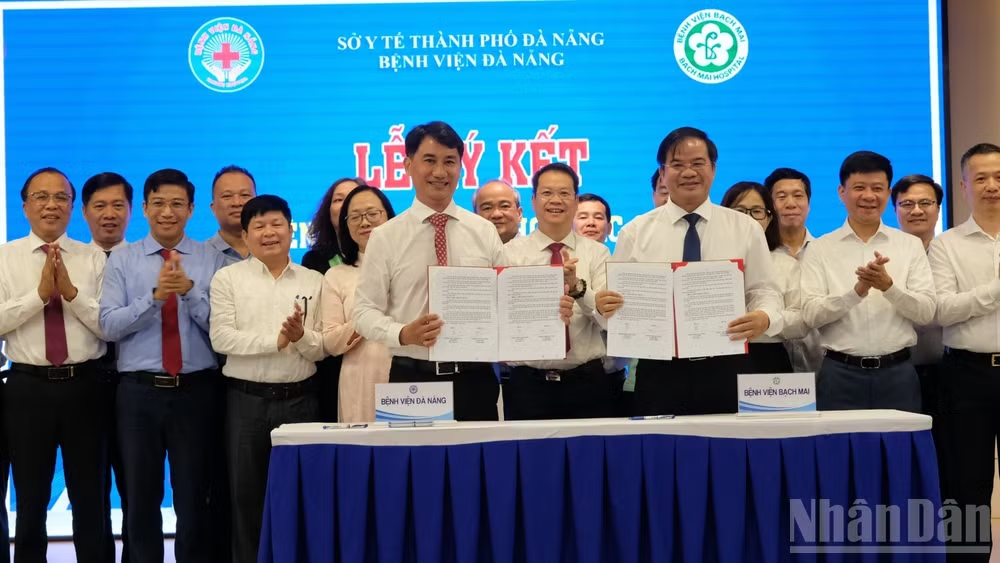
Bach Mai Hospital and Da Nang Hospital have signed a comprehensive cooperation agreement for 2026–2030, targeting advanced clinical services, workforce development, technology transfer and hospital management. Beyond institutional cooperation, the strategic ambition is to strengthen Da Nang’s position as a regional referral center serving Central Vietnam and the Central Highlands.
Signed on October 17, 2026, the agreement covers specialist training, professional exchanges, remote consultations, scientific research and advanced medical techniques. Da Nang Hospital currently operates 43 clinical and paraclinical departments, 10 administrative divisions and four specialized centers, including cardiovascular medicine, transplantation, neurotrauma and radiotherapy.
The partnership also supports Da Nang Hospital’s ambition to achieve special-class hospital status and explore medical tourism. However, specific investment commitments, technology-transfer budgets and measurable clinical outcomes have not yet been announced.
Why It Matters
- Regional clinical capacity could reduce unnecessary referrals to major hospitals in Hanoi and Ho Chi Minh City.
- Technology transfer offers an alternative to infrastructure-led growth, allowing existing facilities to deliver more advanced services.
- Specialist training may improve hospital productivity, when newly acquired competencies translate into sustained clinical practice.
- Medical tourism introduces a potential revenue opportunity, but requires internationally credible service quality.
- Partnership success depends on measurable implementation, not simply signed agreements.
Healthcare Insight Analysis
Healthcare Insight believes this partnership represents an important evolution in Vietnam’s hospital development model.
The next competitive advantage may not come from building more hospitals, but from enabling regional hospitals to perform procedures previously concentrated at national referral centers.
Vietnam’s healthcare challenge is partly structural.
Advanced specialists are concentrated in major institutions.
Complex patients may travel considerable distances for treatment.
Referral hospitals face heavy demand, while regional capacity may remain uneven.
Strengthening regional capability could help address these imbalances.
But technology transfer involves more than introducing a medical procedure.
Physicians need supervised training.
Equipment must meet technical requirements.
Clinical teams need standardized protocols.
Complications require reliable emergency support.
Outcomes must be continuously monitored.
The value chain becomes:
specialist training → clinical competency → independent service delivery → patient retention → regional healthcare capacity.
This distinction matters for capital allocation.
A hospital can purchase advanced equipment without developing the personnel or workflows required to use it effectively.
By contrast, institutional partnerships can potentially accelerate the productive use of existing resources.
Technology ownership does not create clinical capability. Consistent clinical execution does.
Bach Mai’s contribution could extend beyond individual procedures to multidisciplinary decision-making, quality management and hospital governance.
For Da Nang Hospital, the strategic opportunity is to build sustainable specialty services rather than depend indefinitely on external expert support.
However, the number of transferred techniques is not equivalent to the number of techniques independently and safely performed.
The appropriate KPIs are:
staff trained → competencies certified → procedures performed → complications monitored → patient outcomes improved.
Medical tourism represents a second, distinct growth opportunity.
Da Nang’s tourism infrastructure may support future integration of healthcare and hospitality services.
Yet international patient attraction requires transparent clinical results, language services, coordinated follow-up and credible quality assurance.
A tourism destination does not automatically become a medical tourism destination.
The partnership’s real economic potential therefore depends on two complementary outcomes:
stronger regional healthcare access + higher-value specialized clinical services.
For hospital leaders, the central question is whether knowledge transfer can produce repeatable capabilities that remain after visiting specialists return to their home institutions.
Market Implications
Da Nang Hospital: could strengthen its regional referral role and expand specialized services through better clinical capabilities.
Bach Mai Hospital: can extend its expertise through training, remote consultation and institutional collaboration.
Regional hospitals: may benefit from more structured referral pathways and specialist-support networks.
Medical device and healthtech companies: could see demand for advanced clinical equipment, teleconsultation and training systems.
Healthcare investors: should evaluate service utilization, clinical outcomes, referral flows and implementation costs before assigning commercial value to the partnership.
ANALYTICAL MATRIX
| Dimension | Current Signal | Opportunity | Key Risk |
| Institutional cooperation | 2026–2030 agreement | Long-term capability building | Slow execution |
| Clinical specialization | Four specialized centers | Advanced regional services | Workforce gaps |
| Technology transfer | Training and consultations planned | Greater clinical independence | Dependence on external experts |
| Hospital governance | Quality and digital initiatives | Higher operating efficiency | Integration challenges |
| Medical tourism | Strategic development objective | New patient segments | Unproven demand |
Bach Mai and Da Nang Hospital are not simply expanding professional cooperation. They are testing whether Vietnam can redistribute advanced medical expertise more effectively across its healthcare system.
The greatest value will emerge when transferred knowledge becomes independent, measurable and sustainable clinical capacity.
For hospital executives, the next growth model should therefore connect specialized workforce development with operational productivity and regional patient needs.
The broader industry signal is clear:
Vietnam’s hospital competitiveness is shifting from expanding physical infrastructure toward building clinical capabilities where patients actually need them.