

Key Development
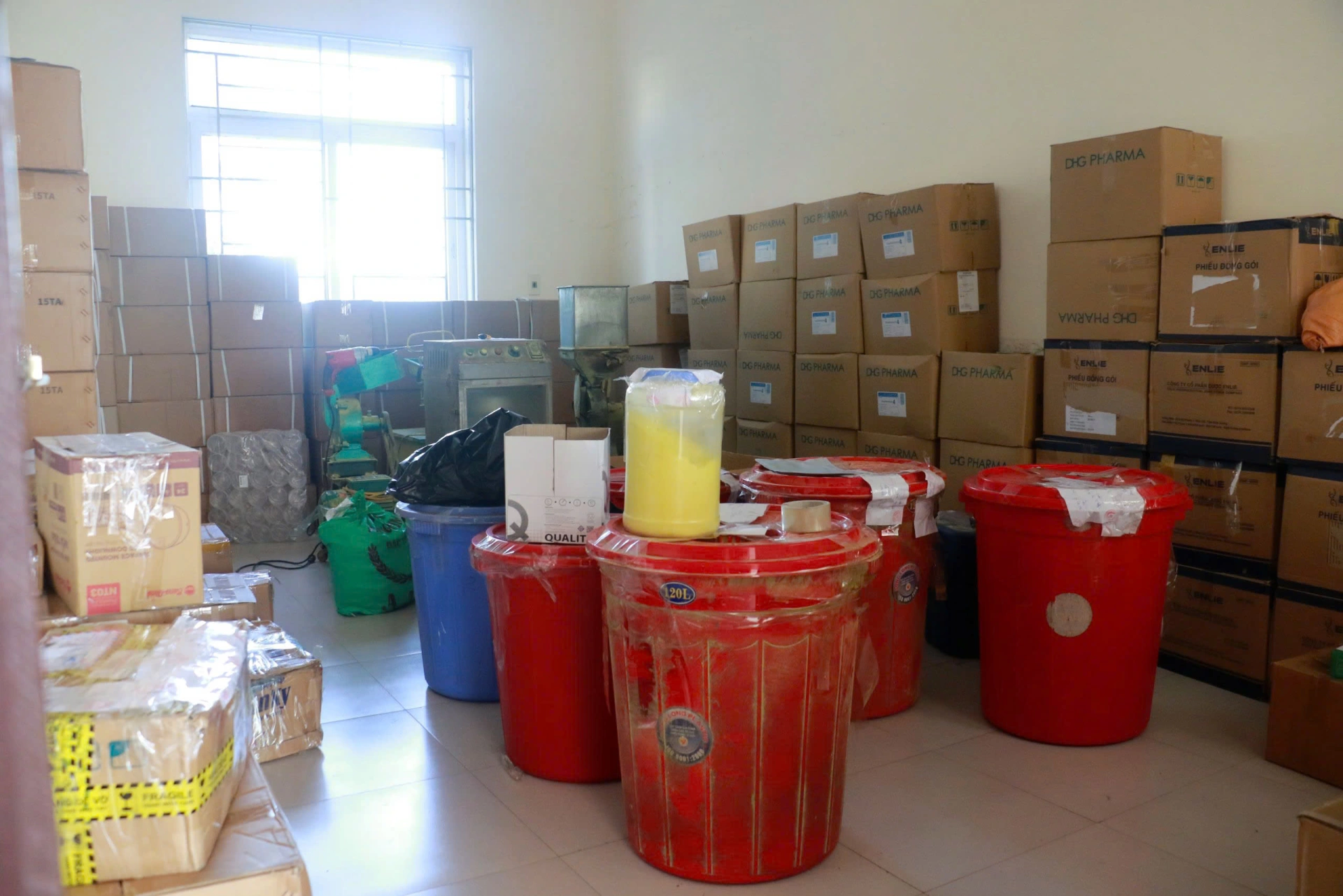
Police in Vietnam’s Nghe An province have dismantled an alleged counterfeit-medicine operation that used traditional herbal medicine branding, social media influencers and online communities to reach thousands of consumers nationwide. With approximately 20,000 finished bottles seized and an estimated VND 5 billion in illicit profits, the case exposes a growing pharmaceutical risk: products can build commercial credibility online without passing through legitimate drug-quality controls.
As of October 17, 2026, investigators had initiated criminal proceedings against 10 suspects in connection with the alleged manufacture and sale of counterfeit medicines. Authorities reported seizing more than 100 kilograms of ingredients, production equipment and VND 850 million in cash.
According to police findings, the operation marketed treatments for sinusitis, allergic rhinitis, gastric conditions and tumors as traditional herbal products. Investigators alleged that some preparations combined conventional pharmaceutical ingredients with herbs without controlled formulation or accurate dosing. From February to June 2026, the network reportedly reached thousands of buyers through influencers, social media groups and resellers who repackaged products under different labels.
Why It Matters
- Counterfeit medicines are becoming a digital distribution problem, as social platforms can connect unauthorized manufacturers directly with patients.
- Uncontrolled pharmaceutical ingredients create significant safety risks, including uncertain dosing, adverse reactions and delayed appropriate treatment.
- Influencer-based promotion can create perceived credibility without providing evidence of product registration or manufacturing quality.
- Fragmented repackaging complicates traceability, making identification and removal of suspect products more difficult.
- Legitimate pharmaceutical companies face reputational spillovers, particularly when fraudulent sellers exploit consumer trust in traditional medicine.
Healthcare Insight Analysis
Healthcare Insight believes the Nghe An case illustrates a structural weakness in pharmaceutical market oversight.
The counterfeit-drug challenge is no longer confined to illegal manufacturing. It increasingly involves the ability to convert online attention into medicine sales without a verifiable chain of pharmaceutical accountability.
Traditional pharmaceutical distribution depends on controlled processes.
Manufacturers must be authorized.
Products must meet quality requirements.
Ingredients and dosage must be controlled.
Distribution channels must preserve traceability.
Consumers must receive reliable product information.
The alleged operation bypassed these safeguards while using familiar commercial techniques.
Unverified health claims → influencer credibility → online demand → decentralized distribution → difficult-to-trace exposure.
That creates an asymmetric competitive environment.
Legitimate manufacturers invest in quality management, product registration, testing and regulatory compliance.
Illegal operators can avoid these costs while competing through persuasive health claims and lower operating barriers.
The immediate concern is patient safety.
If products marketed as entirely herbal contain undisclosed pharmaceutical ingredients, consumers may unknowingly face drug interactions, inappropriate doses or contraindications.
Claims involving serious conditions such as tumors introduce another risk: patients may delay evidence-based medical assessment or treatment.
However, the reported investigation does not establish that every purchaser experienced harm or identify the precise clinical consequences of the products.
The commercial model is equally revealing.
According to police, participants used influencers and online group administrators to support sales, while downstream sellers could repackage products under separate labels.
This separates the physical product from a single identifiable commercial identity.
One manufacturing source → multiple sellers → different labels → dispersed consumers.
For regulators, the challenge becomes identifying distribution relationships rather than merely locating a production site.
For legitimate pharmaceutical businesses, protecting product credibility increasingly requires cooperation across manufacturers, licensed pharmacies, digital platforms and enforcement authorities.
Batch verification, authorized-seller identification, suspicious-advertisement reporting and consumer education could strengthen this system.
But technology alone is insufficient.
A QR code or online storefront does not establish pharmaceutical authenticity unless the underlying registration and traceability information can be independently verified.
The key strategic objective is therefore to make legitimate pharmaceutical supply chains easier to verify and illegal distribution harder to monetize.
Market Implications
Pharmaceutical manufacturers: should strengthen brand protection, supply-chain verification and surveillance of misleading online product claims.
Pharmacy chains: have an opportunity to differentiate through authorized sourcing, pharmacist counseling and reliable product information.
Digital platforms and social-commerce operators: face growing pressure to identify unauthorized medicine advertising and misleading therapeutic claims.
Regulators and law enforcement: may benefit from stronger coordination between pharmaceutical registration databases, online monitoring and distribution investigations.
Healthcare investors: should increasingly assess product authenticity, distribution controls and digital compliance risks alongside conventional sales growth.
ANALYTICAL MATRIX
| Dimension | Current Signal | Opportunity | Key Risk |
| Enforcement | 10 suspects prosecuted | Disrupt illegal networks | Wider distribution remains unidentified |
| Product volume | About 20,000 bottles seized | Stronger traceability systems | Unknown prior consumer exposure |
| Manufacturing | Uncontrolled ingredient mixing | Quality verification | Safety and dosing uncertainty |
| Online distribution | Influencers and social groups | Digital-market surveillance | Rapid redistribution |
| Market economics | Approximately VND 5bn illicit profit | Protect legitimate channels | Consumer trust erosion |
The Nghe An case is not simply about counterfeit medicines being manufactured. It is about how an unauthorized pharmaceutical business model can use digital influence to compete with regulated healthcare distribution.
The strategic response must therefore extend beyond factory inspections and product seizures.
Effective protection requires verified sourcing, accountable online promotion, traceable distribution and reliable access to qualified healthcare professionals.
For Vietnam’s pharmaceutical industry, the next competitive advantage may lie in making authenticity as visible and verifiable as price and convenience.
The broader industry signal is clear:
pharmaceutical safety now depends as much on controlling digital routes to patients as it does on controlling physical production.