

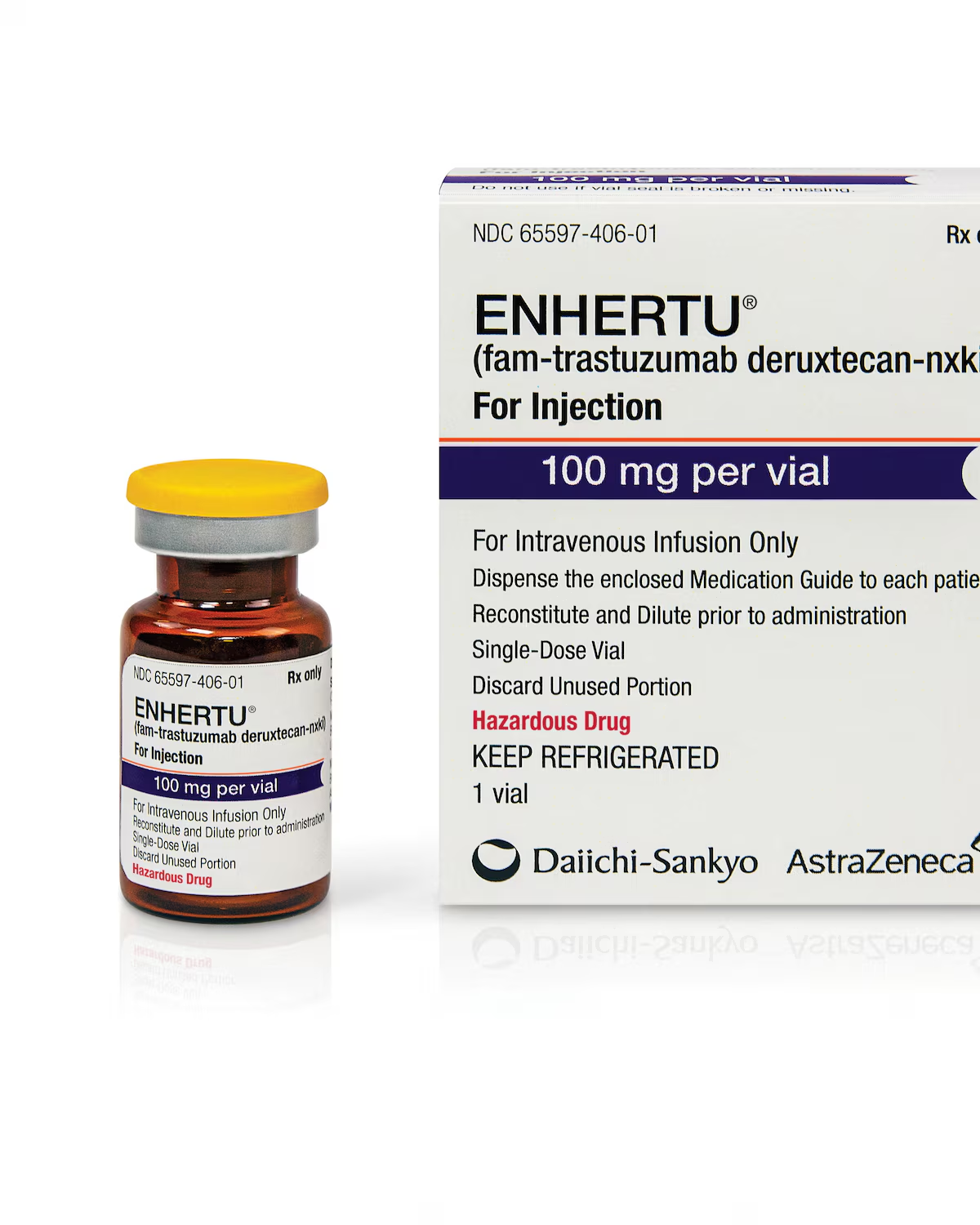
Expansion Into Curative-Intent Treatment Settings The US Food and Drug Administration (FDA) has granted regulatory clearance for two new indications of Enhertu (trastuzumab deruxtecan) targeting adult patients with HER2-positive early-stage breast cancer. This regulatory milestone incorporates the antibody-drug conjugate (ADC), jointly developed and commercialized by AstraZeneca and Daiichi Sankyo, into early-stage, curative-intent intervention strategies.
Detailed Breakdown of the New Indications
-
Pre-Surgical Setting (Neoadjuvant): Enhertu followed by a regimen consisting of taxane, trastuzumab, and pertuzumab (THP) is now indicated for individuals diagnosed with HER2-positive Stage II or Stage III breast cancer.
-
Post-Surgical Setting (Adjuvant): Enhertu has been approved as a standalone therapeutic option for patients who present with residual invasive disease in tissue samples following prior preoperative taxane and trastuzumab-based therapies.
Clinical Evidence from Phase III Evaluation The approvals are rooted in efficacy and safety findings extracted from two pivotal international trials:
-
The DESTINY-Breast11 Trial: In the neoadjuvant phase, administering Enhertu before transitioning to THP yielded a pathologic complete response (pCR) rate of 67.3%, demonstrating a significant statistical improvement over the 56.3% recorded for the standard dose-dense chemotherapy regimen (ddAC-THP).
-
The DESTINY-Breast05 Trial: In the adjuvant phase for residual disease, Enhertu reduced the risk of invasive disease recurrence or mortality by 53% compared to the active control therapy, trastuzumab emtansine (T-DM1). The 3-year invasive disease-free survival (IDFS) rate stood at 92.4% for the Enhertu cohort versus 83.7% for the T-DM1 cohort.
Safety Overview and Clinical Practice Integration The overall safety profiles observed during both clinical programs aligned with existing product data, with no new safety irregularities identified. Drug-related interstitial lung disease (ILD) or pneumonitis occurred in 9.6% of patients within the Enhertu arm of the post-surgery study, with the vast majority of cases falling into low-grade severities. Following these outcomes, the NCCN Clinical Practice Guidelines in Oncology have incorporated Enhertu as a Category 1 recommended option for post-neoadjuvant treatment in eligible high-risk patients.