

Key Development
Can Tho’s 500-bed Oncology Hospital is approaching physical completion after years of disruption, but completing a hospital and creating usable cancer-treatment capacity are not the same milestone.
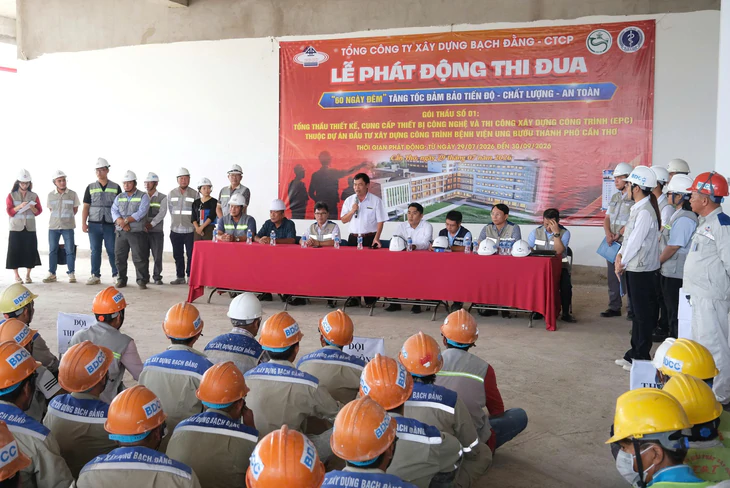
On October 5, 2026, the Can Tho Department of Health said basic construction had reached approximately 90%, with official operations targeted for January 2027. September reporting had put construction progress at 77.86%, while 97.9% of specialized medical equipment had already been ordered. The project’s revised investment totals approximately VND2.072 trillion.
The project also carries an important financing history. Originally structured around Hungarian ODA, construction stalled after the loan agreement and EPC contract expired in 2022. In late 2025, the financing package was restructured to approximately VND272 billion of Hungarian ODA, VND1.334 trillion from the central budget and more than VND465 billion from the local budget, enabling construction to restart in 2026.
Why It Matters
- The regional cancer burden is substantial. Can Tho Oncology Hospital has estimated roughly 30,000 new cancer cases annually in the Mekong Delta, with more than half diagnosed at Stage III or IV.
- Radiotherapy remains a visible capacity constraint. A new LINAC commissioned in June is currently serving approximately 140–150 treatment sessions per day, while deployment of a second system remains delayed by supplier-related legal complications.
- A hospital cannot run on infrastructure alone. The hospital is separately pursuing more than VND154.27 billion of chemicals, laboratory supplies and equipment to protect continuity across chemotherapy, molecular testing and diagnostics.
- The hospital’s strategic catchment extends beyond Can Tho. Local authorities explicitly position the 500-bed project as infrastructure serving the wider Mekong Delta.
Healthcare Insight Analysis
Healthcare Insight believes the most important KPI between now and January 2027 is no longer percentage of construction completed.
It is percentage of clinical readiness achieved.
An oncology hospital can be physically complete while generating limited additional treatment capacity if equipment has not been commissioned, diagnostics are not synchronized, specialist staffing is insufficient or medicines and consumables cannot be procured continuously.
Can Tho’s history makes that distinction particularly important.
The project’s first major challenge was financial and contractual:
financing risk became construction delay.
Its next challenge may follow a different sequence:
construction risk → commissioning risk → operational risk.
The second radiotherapy system illustrates the point. The constraint is currently not cancer demand or even necessarily the capital to acquire the machine; it is a legal and supplier issue preventing deployment from being completed.
That makes vendor resilience part of cancer-care capacity.
A high-value medical device creates little clinical value if legal continuity, maintenance support, spare parts or technical servicing break down.
The second strategic question is patient flow.
A region generating roughly 30,000 new cancer cases annually does not simply need another large hospital. It needs a network architecture:
provincial detection → standardized pathology/imaging → referral of complex cases → specialized treatment in Can Tho → follow-up closer to home.
If every patient must remain at the tertiary center throughout the entire treatment journey, even a new 500-bed facility can eventually reproduce the congestion it was built to solve.
The third issue is modality integration.
Modern oncology no longer operates effectively as isolated departments. Surgery, systemic therapy, radiotherapy, molecular diagnostics and supportive care need to be coordinated around a common patient pathway.
The new hospital’s true competitive advantage will therefore not be its bed count.
It will be its ability to move a patient efficiently through:
diagnosis → staging → molecular testing → multidisciplinary decision → treatment.
That is the difference between a hospital building and a functioning oncology platform.
Market Implications
Hospitals: performance should shift toward radiotherapy waiting time, machine uptime, pathology turnaround and time-to-treatment.
Medtech: opportunities extend across radiotherapy, imaging, pathology, molecular diagnostics, maintenance and lifecycle services.
Pharma: greater regional oncology concentration could expand demand for targeted therapy, immunotherapy and structured patient-support programs.
Workforce: radiation oncology, medical physics, pathology and oncology nursing may become the next constraints once physical capacity expands.
ANALYTICAL MATRIX
| Dimension | Current Position | Next Bottleneck | KPI to Watch |
| Construction | ~90% complete | Handover and clinical commissioning | Clinically ready areas |
| Radiotherapy | 1 LINAC operating; second delayed | Commissioning + vendor resilience | Uptime, waiting time |
| Medicines & supplies | Supply more stable | Procurement continuity | Treatment interruptions |
| Scale | 500 beds | Regional patient-flow design | Referral completion |
| Clinical model | Potential regional oncology hub | Workforce + MDT integration | Time-to-treatment |
Can Tho is close to resolving what was once the project’s hardest problem: finishing the hospital.
The harder challenge begins immediately afterward — turning beds, equipment and capital into treatment pathways that work reliably every day.
If that transition succeeds, January 2027 could represent more than the opening of another hospital. It could mark the beginning of a more regionalized cancer-care model for the Mekong Delta, built around Can Tho as a specialist oncology hub rather than merely a larger treatment facility.