

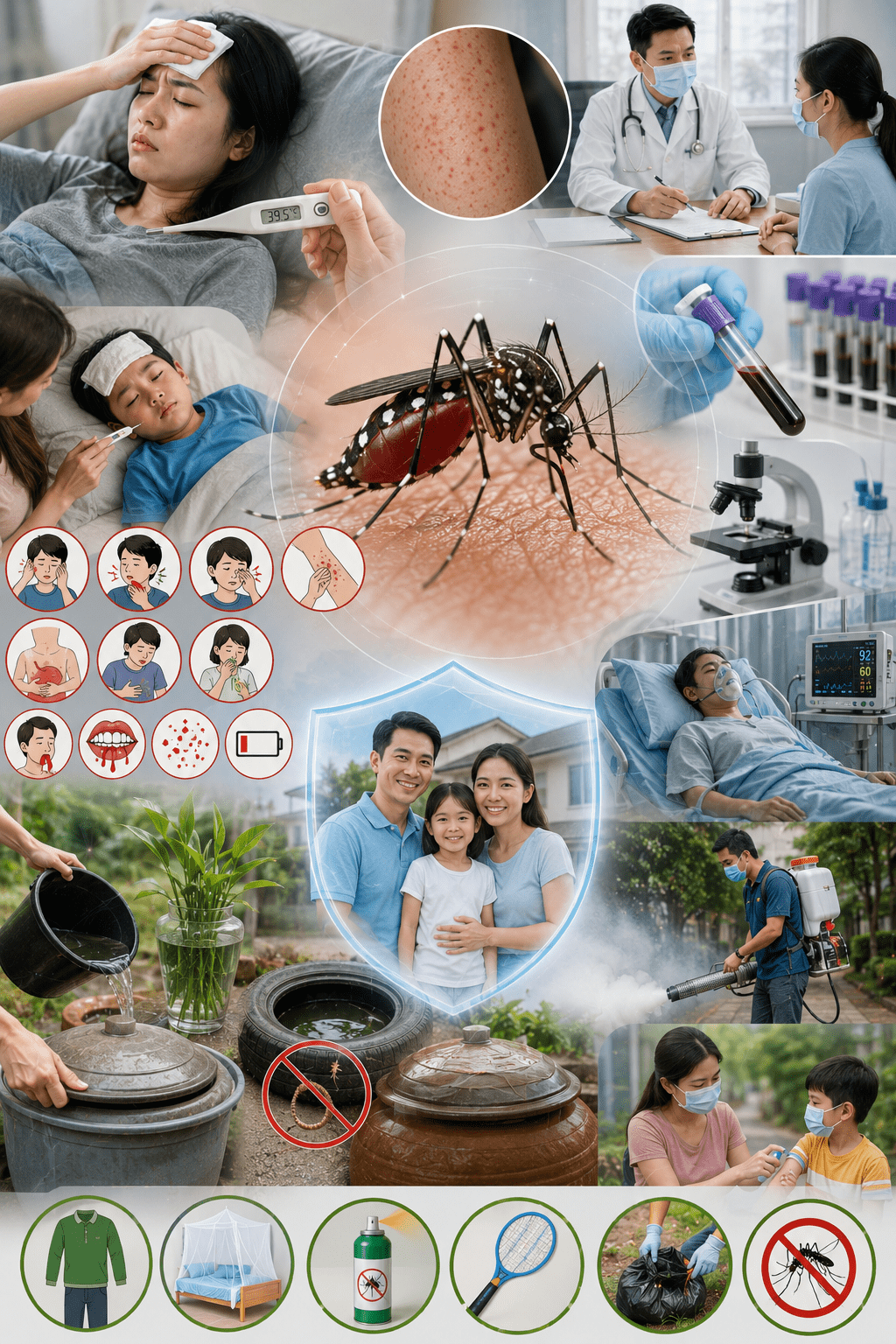
What is Dengue Fever?
Dengue fever is an acute viral infectious disease caused by the dengue virus and transmitted to humans through the bite of infected Aedes mosquitoes, commonly known as mosquito vectors. It is one of the most prevalent mosquito-borne diseases in tropical and subtropical regions worldwide, including Vietnam.
The disease can affect individuals of all ages. While most patients recover completely, some may develop severe dengue, which can lead to shock, severe bleeding, multi-organ dysfunction, and even death if not recognized and treated promptly.
Causes of Dengue Fever
Dengue fever is caused by the dengue virus, a member of the Flaviviridae family. There are four distinct serotypes of the virus:
- DENV-1
- DENV-2
- DENV-3
- DENV-4
An individual may contract dengue more than once during their lifetime because immunity acquired after infection is generally specific to the infecting serotype.
Aedes mosquitoes, particularly Aedes aegypti, are the primary vectors responsible for disease transmission. These mosquitoes commonly breed in clean, stagnant water found in:
- Water storage containers
- Buckets and basins
- Discarded tires
- Flower vases
- Other household items that collect standing water
Aedes mosquitoes are most active during the early morning and late afternoon hours.
Signs and Symptoms of Dengue Fever
Febrile Phase (Days 1–3)
Common symptoms include:
- Sudden onset of high fever (39–40°C)
- Headache
- Retro-orbital pain (pain behind the eyes)
- Muscle and joint pain
- Fatigue
- Loss of appetite
- Nausea and vomiting
- Skin flushing or rash
Some patients may also develop mild bleeding manifestations, such as:
- Petechiae (small red or purple spots under the skin)
- Gum bleeding
- Nosebleeds
Critical Phase (Usually Days 3–7)
This is the most important period requiring close monitoring.
Notably, patients may begin to feel better or become afebrile during this phase; however, this does not necessarily indicate recovery. Severe complications may occur, including:
- Plasma leakage
- Hemoconcentration
- Thrombocytopenia (low platelet count)
- Dengue shock syndrome
- Severe hemorrhage
- Liver, cardiac, or other organ involvement
Warning Signs Requiring Immediate Medical Attention
Seek medical care immediately if any of the following symptoms occur:
- Severe or persistent abdominal pain
- Persistent vomiting
- Lethargy or restlessness
- Nose or gum bleeding
- Vomiting blood
- Black, tarry stools
- Reduced urine output
- Cold extremities
- Difficulty breathing
- Severe weakness or inability to eat and drink adequately
How is Dengue Fever Diagnosed?
Diagnosis is based on a combination of clinical findings and laboratory investigations.
Clinical Assessment
Healthcare professionals evaluate:
- Acute febrile illness
- Hemorrhagic manifestations
- Warning signs of severe disease
Laboratory Tests
Common diagnostic tests include:
- Complete blood count (CBC) to monitor platelet count and hematocrit
- NS1 antigen test, particularly useful during the early phase of infection
- Dengue IgM and IgG antibody tests
- Reverse transcription polymerase chain reaction (RT-PCR) in selected cases
Treatment of Dengue Fever
Currently, there is no specific antiviral treatment for dengue infection.
Management is primarily supportive and focuses on careful monitoring and fluid management.
Appropriate Fever Management
- Paracetamol (acetaminophen) is the recommended medication for fever control, according to healthcare professional guidance.
- Patients should avoid: Aspirin, Ibuprofen, other nonsteroidal anti-inflammatory drugs (NSAIDs)
These medications may increase the risk of bleeding.
Adequate Fluid Replacement
Patients are encouraged to maintain hydration by drinking:
- Water
- Oral rehydration solution (ORS)
- Fruit juices
- Soups and broths
Fluid intake and urine output should be monitored closely.
Close Monitoring
Patients should attend scheduled follow-up visits and undergo laboratory testing as recommended to detect complications early.
Severe cases may require hospitalization for:
- Intravenous fluid therapy
- Hemodynamic monitoring
- Management of complications
Dengue vaccines are now available in several countries and may help reduce the risk of dengue infection and severe disease in eligible populations. Vaccination should be considered in accordance with national recommendations and healthcare provider guidance.
Common Misconceptions
“Once the fever subsides, the disease is over.”
This is a dangerous misconception. In fact, the critical phase of dengue often begins when the fever starts to decline, making continued observation essential.
Self-administered Intravenous Fluids at Home
Intravenous fluid administration without medical supervision may result in:
- Fluid overload
- Pulmonary edema
- Respiratory failure
Self-medication with Anti-inflammatory Drugs
Medications such as aspirin and ibuprofen can significantly increase the risk of serious bleeding complications.
Preventing Dengue Fever
The most effective strategy for dengue prevention remains mosquito control and elimination of breeding sites.
Eliminate Mosquito Larvae
- Cover water storage containers tightly
- Change water in flower vases regularly
- Remove stagnant water around the home
- Maintain environmental sanitation
Prevent Mosquito Bites
- Wear long-sleeved clothing
- Sleep under mosquito nets, even during the daytime
- Use mosquito repellents
- Employ appropriate mosquito control measures
Participate in Community Prevention Programs
- Cooperate with public health mosquito-control campaigns
- Participate in community clean-up and environmental sanitation activities
When Should You Seek Medical Care?
Consult a healthcare provider if:
- Fever persists for more than two days
- Symptoms suggest possible dengue infection
- Any warning signs develop
- You belong to a high-risk group, including young children, older adults, pregnant women, or individuals with underlying medical conditions
Dengue fever is a potentially serious infectious disease that can progress rapidly and cause life-threatening complications. Early recognition, appropriate monitoring, and timely medical care are essential to reducing morbidity and mortality.
Every individual, family, and community plays a vital role in dengue prevention through mosquito control, elimination of breeding sites, and protection against mosquito bites. Together, these efforts can significantly reduce the burden of dengue and protect public health.