

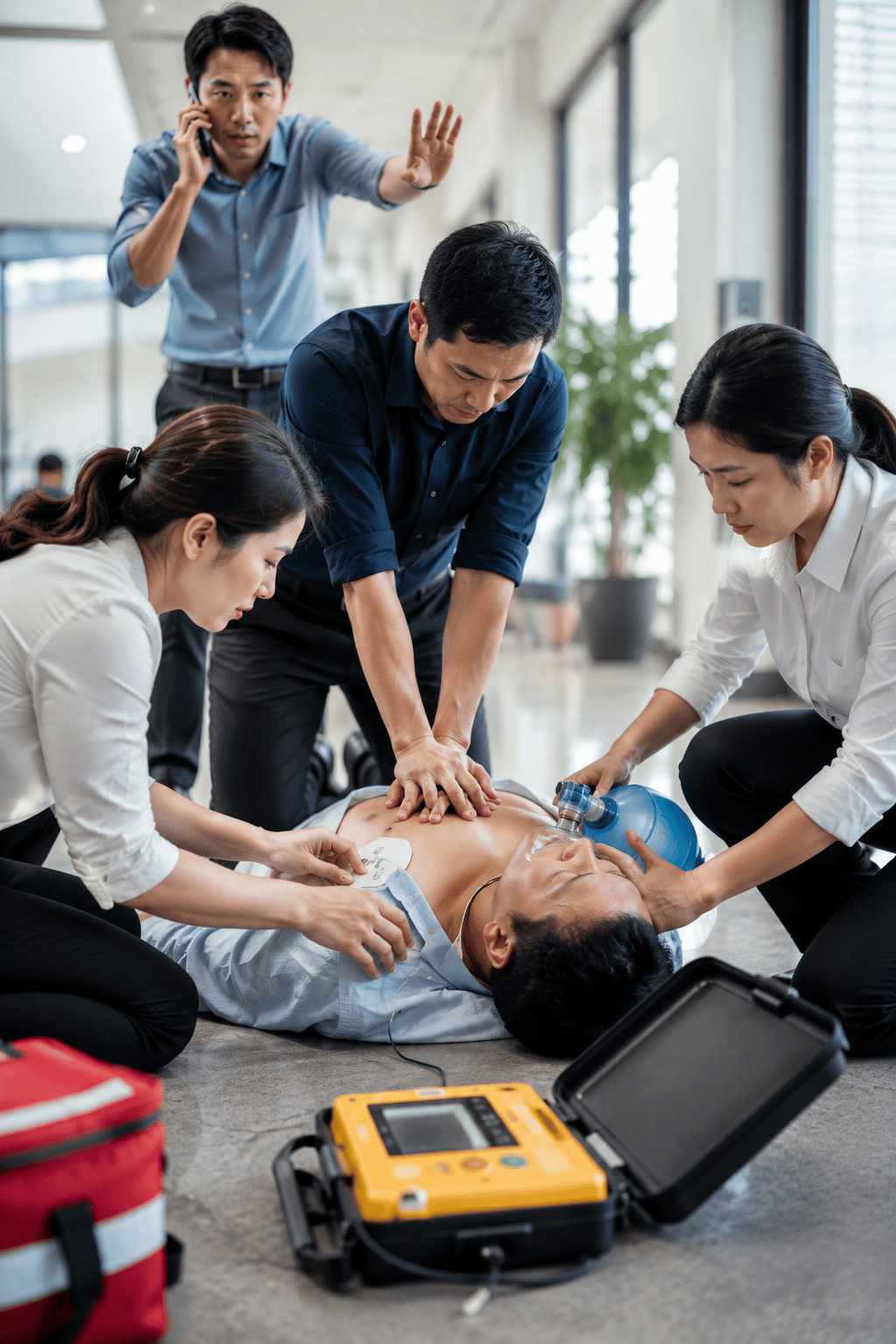
Early identification remains the most critical step in the emergency response pathway
Sudden cardiac arrest is one of the most time sensitive medical emergencies encountered in both community and healthcare settings. Unlike many acute conditions where treatment can be delayed until professional care arrives, cardiac arrest requires immediate recognition and intervention. The first few minutes after collapse largely determine whether a patient survives and whether neurological function can be preserved.
For healthcare organizations, employers, educational institutions, and public facilities, strengthening awareness of the earliest clinical indicators is becoming an essential component of emergency preparedness. Early recognition enables bystanders to activate emergency medical services, initiate cardiopulmonary resuscitation, and deploy an automated external defibrillator without unnecessary delay.
Understanding sudden cardiac arrest
Sudden cardiac arrest occurs when the heart abruptly stops pumping blood effectively because of a malfunction in its electrical system. As circulation ceases, oxygen can no longer reach the brain and other vital organs, causing immediate loss of consciousness.
Permanent brain injury may begin within only a few minutes if circulation is not restored. The likelihood of survival declines rapidly with every passing minute before effective resuscitation is initiated.
It is important to distinguish sudden cardiac arrest from a heart attack. A heart attack results from reduced or blocked blood flow to the heart muscle. Although a heart attack can trigger cardiac arrest, the two conditions are clinically different and require different emergency responses.
Key clinical indicators that require immediate action
Immediate loss of consciousness
The most recognizable feature of sudden cardiac arrest is an unexpected collapse followed by complete unresponsiveness. Individuals fail to react when spoken to or when their shoulders are gently shaken.
An unconscious person who cannot respond should always be treated as a medical emergency until proven otherwise.
Absent or abnormal breathing
Following collapse, breathing often stops completely. In other cases, the individual may produce slow, irregular gasping breaths that are ineffective for oxygen delivery.
This abnormal breathing pattern should never be interpreted as normal respiration. Emergency responders and trained first aid providers recommend limiting breathing assessment to approximately ten seconds before initiating further action.
Unexpected collapse during routine activity
Many victims experience sudden cardiac arrest while performing ordinary daily activities without obvious warning.
Although some individuals may report symptoms such as chest discomfort, shortness of breath, dizziness, or palpitations before collapsing, many cases occur without preceding signs. Any person who is unconscious and not breathing normally should immediately be considered a suspected cardiac arrest patient.
Priorities during the initial emergency response
Once sudden cardiac arrest is suspected, immediate intervention is essential.
The first priorities include ensuring the environment is safe, confirming that the person is unresponsive and not breathing normally, activating emergency medical services, and requesting assistance from nearby individuals.
High quality cardiopulmonary resuscitation should begin immediately while an automated external defibrillator is retrieved if available. The device should be used as soon as possible by following its spoken instructions. Resuscitation efforts should continue until healthcare professionals assume care or the patient demonstrates clear signs of recovery.
Correcting common misconceptions
Several misconceptions continue to delay life saving intervention.
One common misunderstanding is that gasping indicates adequate breathing. In reality, gasping is frequently observed during the early stages of cardiac arrest and should be regarded as a warning sign requiring immediate cardiopulmonary resuscitation.
Another misconception is that bystanders must first identify a pulse before starting chest compressions. Current international resuscitation guidance advises nonmedical responders to prioritize recognition of unresponsiveness and abnormal breathing rather than delaying treatment to perform pulse assessment.
A further misconception is that waiting for emergency medical personnel offers the safest course of action. Evidence consistently demonstrates that immediate intervention by nearby individuals significantly improves survival while reducing the risk of severe neurological injury.
Implications for healthcare systems and organizations
As healthcare systems continue expanding public access defibrillation programs and community resuscitation training, early recognition remains the foundation of successful emergency response. Hospitals, workplaces, schools, transportation hubs, and other public venues all play an important role in strengthening preparedness through staff education, CPR training, and accessible automated external defibrillators.
Improving awareness of the earliest signs of sudden cardiac arrest not only shortens the time to intervention but also contributes to better clinical outcomes across the broader healthcare ecosystem.
Recognizing an unexpected collapse, identifying abnormal breathing, and responding immediately with cardiopulmonary resuscitation and early defibrillation remain the interventions most likely to save a life before advanced medical care arrives.