

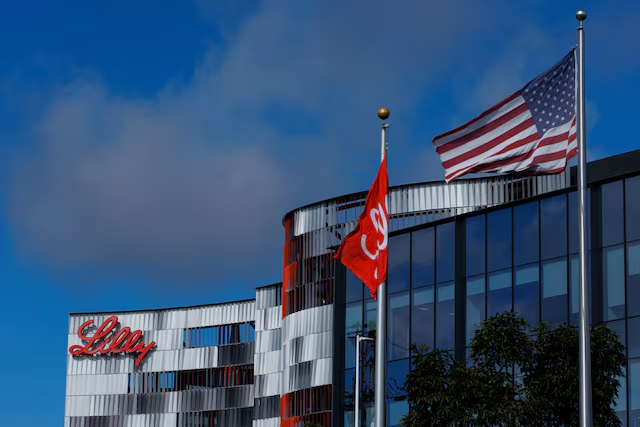
U.S. pharmaceutical heavyweight Eli Lilly has announced definitive agreements to purchase three clinical-stage vaccine developers in multi-lateral transactions valued at up to $3.8 billion in cumulative financing. The structured expansion signals Lilly’s renewed commitment to enter the infectious disease prevention space, a therapeutic sector that was largely sidelined in recent fiscal years as the conglomerate prioritized expanding its alternative developmental pipelines. Boosted by heavy capital inflows generated by global demand for its frontline obesity medications, Lilly’s transactional M&A spending throughout 2026 has significantly outpaced its historical benchmarks.
The primary financial architectures and clinical pipeline parameters defining the acquired corporate entities include the following targets:
-
Curevo: Under the verified terms, shareholders are positioned to receive up to $1.5 billion in cash liquidity, encompassing an upfront execution disbursement alongside subsequent clinical milestone tracking rewards. Curevo is actively spearheading the development of amezosvatein, an investigational vaccine candidate targeting shingles.
-
LimmaTech Biologics: The entity will be incorporated into Lilly for a total consideration of up to $780 million in cash. Its primary investigational asset, LTB-SA7, is currently undergoing early-stage clinical evaluation as a targeted vaccine candidate engineered to counteract S. aureus, a dominant pathogen correlated with surgical-site infections.
-
Vaccine Company: Lilly has committed a capital package totaling up to $1.55 billion to absorb the biotechnology manufacturer. The target enterprise is currently advancing a biological vaccine designed to provide immunity against the Epstein-Barr virus, a highly contagious and widespread viral pathogen.
Daniel Skovronsky, Lilly’s Chief Scientific and Product Officer, noted that these strategic expansions reflect a deliberate corporate mechanism engineered to systematically intercept and prevent diseases at their biological source rather than managing their downstream clinical consequences. From a macroeconomic vantage, Citi analyst Geoffrey Meacham highlighted that the specific operational focus of each target developer isolates viral pathogens historically linked to long-term neurological and oncological degradation risks, directly aligning with Lilly’s existing therapeutic footprints. Market observers add that this concentrated investment momentum follows the hiring of former U.S. FDA official Peter Marks as the head of infectious disease in October, validating Lilly’s intent to position itself as a core vaccine innovator through deals carrying highly manageable, “bite-sized” price tags relative to its overarching corporate valuation.