

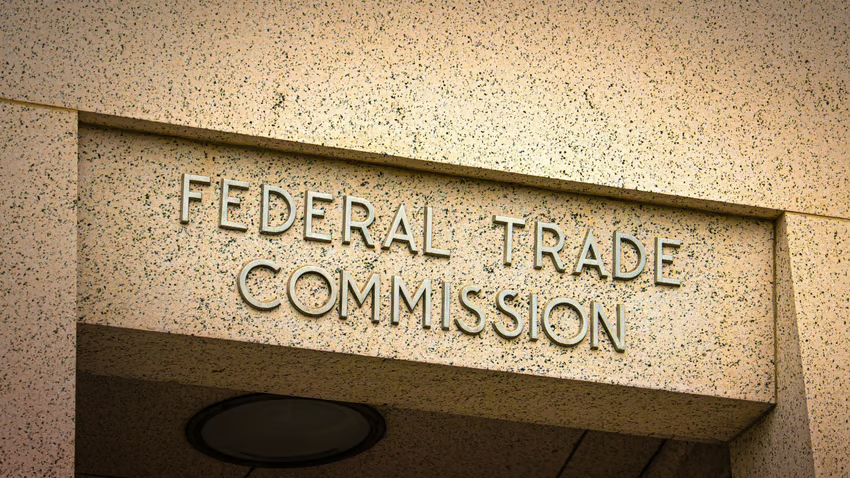
The U.S. Federal Trade Commission (FTC) has issued a proposed consent order requiring Indian drugmaker Aurobindo Pharma to divest four critical generic drugs from its pending portfolio before it can legally close its $250 million acquisition of Pennsylvania-based generics specialist Lannett. The antitrust intervention is designed to resolve systemic anti-competitive liabilities, protecting the marketplace from monopolistic consolidation.
The documented 4 divested molecular pipelines, the designated manufacturing counterparty, and the macro reshoring objectives of the transaction feature:
-
Statistical Caseload of the 4 Mandated Generic Drug Divestitures:
-
The U.S. regulatory agency emphasized that Aurobindo and Lannett currently operate as two of a highly restricted pool of market competitors manufacturing these four distinct generic pharmaceutical products. In the absence of an immediate carve-out, the transaction would mathematically scale the likelihood that Aurobindo could unilaterally exert anti-competitive market power, or engage in coordinated pricing interactions with remaining market entities to raise generic drug prices for millions of patients.
-
The specialized compound portfolios that Aurobindo is legally compelled to surrender encompass:
-
Mycophenolate mofetil: An essential immunosuppressant therapy formulated to prevent organ transplant rejection in surgical cohorts.
-
Pilocarpine: A targeted small molecule designed to treat severe dry mouth symptoms in patients undergoing radiation oncology protocols for Sjogren’s syndrome.
-
Rabeprazole: A standard proton pump inhibitor (PPI) engineered to suppress pathological stomach acid secretion.
-
Niacin extended-release tablets: A metabolic formulation indicated to manage clinical cholesterol levels and correct complex B-vitamin deficiencies.
-
-
-
Designated Alternate Transferee and Public Administrative Timelines:
-
The Assigned Buyer: The FTC’s enforcement decree specifically mandates that Aurobindo liquidate and transfer the complete intellectual and marketing rights of the four products directly to New Jersey-based generic manufacturer Quagen Pharmaceuticals.
-
Regulatory Commentary Window: Unveiled in an official June 18, 2026 release, the FTC’s administrative framework allows a standard 30-day public comment window to absorb external stakeholder depositions before finalizing the structural decree. Daniel Guarnera, Director of the FTC’s Bureau of Competition, affirmed that the agency’s enforcement action functions directly to insulate the healthcare landscape from sudden price inflation spikes across vital generic segments.
-
-
Macro M&A Framing and Aurobindo’s Domestic Reshoring Infrastructure Strategies:
-
Litigation Background: The corporate entities initially disclosed their definitive merger pact in August 2025. In its primary regulatory filings, Aurobindo underscored that the $250 million cash buyout of Lannett was structurally optimized to secure an immediate commercial entry into the high-value attention-deficit/hyperactivity disorder (ADHD) prescription medication sector.
-
Industrial Infrastructure Absorption: Beyond target chemical molecules, the transactional framework secures for Aurobindo unencumbered title to a major domestic manufacturing plant situated in Seymour, Indiana. Aurobindo corporate planners explicitly stated in the regulatory brief that absorbing this localized pharmaceutical infrastructure directly aligns with active sovereign supply chain reshoring initiatives and federal government procurement preferences for domestic manufacturing outputs.
-