

Key Development
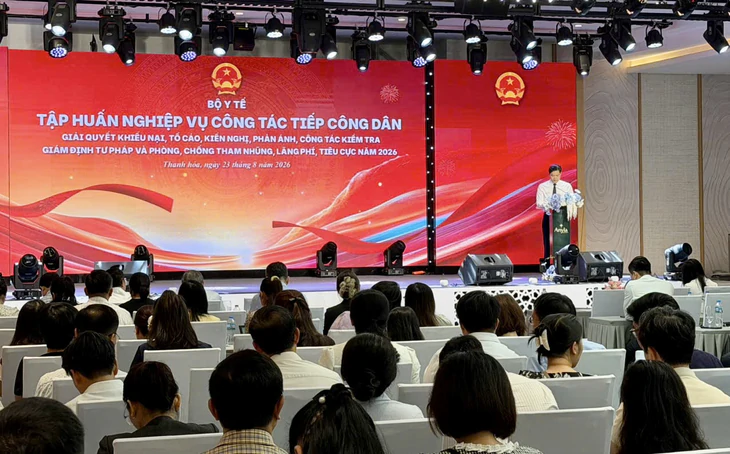
In Thanh Hoa Province, the Ministry of Health (MOH) of Vietnam inaugurated its 2026 Professional Training Conference on Citizen Reception, Petition Processing, Administrative Dispute Resolution, and Anti-Corruption / Anti-Waste Governance. The program was organized by the MOH Office under the direct leadership of Comrade Vu Manh Ha – Alternate Member of the Party Central Committee, Permanent Vice Minister of Health.
Delegation & Expert Faculty:
-
Over 200 Executive Delegates: Comprising department leaders, chief inspectors, legal officers, and administrative directors from central MOH departments, northern Provincial Departments of Health (DOH), and regional public hospital networks.
-
Inter-Agency Expert Faculty: Senior instructors and regulatory authorities representing the Central Internal Affairs Commission, the Government Inspectorate of Vietnam, and the Inspectorate Training School.
Core Curriculum & Operational Modules:
-
Power Oversight & Upstream Anti-Corruption Frameworks: Delivered by the Central Internal Affairs Commission (Director Nguyen Canh Lam), focusing on early risk identification, executive accountability, and preventative compliance across procurement, clinical management, and pharmaceutical licensing.
-
Asset & Income Declaration Oversight: Instructed by the Government Inspectorate (Deputy Director General Nguyen Van Tuan), detailing statutory guidelines for filing, publicly disclosing, and auditing personal asset and income statements for healthcare administrators.
-
Standardizing Citizen Reception & Multi-Party Petition Resolution: Led by the Inspectorate Training School (Dr. Nguyen Huy Hoàng, Vice Principal), delivering practical frameworks for classifying multi-party complaints, determining statutory jurisdiction, conducting face-to-face dialogues, securing evidentiary documentation, and protecting whistleblowers in clinical environments.
Why It Matters
-
High-Stakes Citizen Engagement in Public Healthcare: Healthcare directly impacts patient safety, health outcomes, medical insurance reimbursement, and clinical ethics. Streamlining dispute resolution mechanisms allows healthcare institutions to address patient grievances locally, preventing operational disruption and escalating administrative complaints.
-
Eliminating Administrative Delays & Jurisdictional Avoidance: Permanent Vice Minister Vu Manh Ha emphasized enforcing public service discipline, demanding an immediate end to file passing, jurisdictional avoidance, or prolonged resolution timelines across public hospitals and provincial health agencies.
-
Institutional Transparency & Whistleblower Protection: Standardizing objective, law-compliant complaint handling protocols protects the statutory rights of both healthcare consumers and medical staff, maintaining public trust in public healthcare administration.
Healthcare Insight Analysis
From the perspective of Healthcare Insight, the August 24, 2026 compliance conference in Thanh Hoa illustrates Healthcare Compliance & Proactive Dispute Governance.
Public healthcare administration faces three distinct operational challenges:
-
Differentiating Clinical Adverse Events from Administrative Infractions: Many citizen petitions originate from medical miscommunication or unexpected clinical complications. Training administrators in structured dialogue and clinical mediation helps resolve disputes constructively before escalating into protracted civil or administrative litigation.
-
Mitigating Public Procurement & Governance Risks: Standardizing asset declarations and leadership oversight aligns with central anti-corruption mandates, assisting hospital directors in identifying potential conflicts of interest across medical device leasing, drug tenders, and infrastructure investments.
-
Digital Integration in Petition Tracking: Incorporating electronic workflows into citizen reception protocols enables real-time auditing of petition resolution milestones, ensuring compliance with statutory response deadlines.
Market Implications
-
Comprehensive Review of Public Hospital Complaint SOPs: Northern Provincial Departments of Health and public hospitals will revise internal citizen reception rules and dispute handling Standard Operating Procedures (SOPs).
-
Strict Enforcement of Asset Filing Across Public Health Entities: Public healthcare administrators will enforce standardized archiving and verification of asset disclosure files pursuant to Government Inspectorate guidelines.
-
Elevating Patient Satisfaction Metrics: Professionalized dispute handling and transparent citizen interactions will improve hospital accreditation scores and public Patient Satisfaction Indices (PSI).
Curriculum Matrix: MOH Northern Regional Governance Training (August 2026)
| Training Module | Delivering Institution & Faculty | Operational Focus & Compliance Directive |
| Anti-Corruption & Integrity | Central Internal Affairs Commission (Director N. C. Lam) | Upstream risk identification; executive accountability. |
| Asset & Income Verification | Government Inspectorate (Deputy Director N. V. Tuan) | Standardized procedures for asset declarations & audits. |
| Dispute Resolution & Petitions | Inspectorate Training School (Dr. N. H. Hoang) | Multi-party petition sorting, evidence evaluation & mediation. |
| Program Attendance | $>200$ Healthcare Leaders across Northern Vietnam | Central MOH agencies, provincial DOHs & public hospitals. |
| Executive Directive | Permanent Vice Minister Vu Manh Ha | Eliminates administrative avoidance; enforces local resolution. |