
Key Development
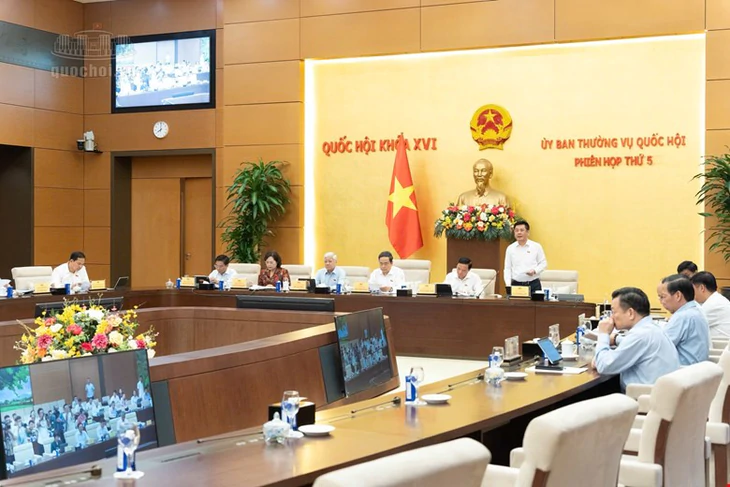
On the afternoon of September 3, 2026, the Standing Committee of the National Assembly of Vietnam (NASC) officially commenced its 6th Session (Phase 1) in Hanoi. The legislative centerpiece of the opening proceedings was the Government’s formal submission of an omnibus draft bill amending and supplementing five foundational statutes across the public health and social protection domains: the Law on Children, Law on Persons with Disabilities, Law on Medical Examination and Treatment, Law on Pharmacy, and Law on Population.
Procedural Schedule & Deliberation Architecture (September 3, 2026):
-
Dedicated Healthcare Legislative Session (16:10 – 17:15 ICT):
-
The Minister of Health presented the Government’s executive report outlining the core provisions, operational urgency, and strategic imperatives driving the five-statute amendment.
-
The Chair of the National Assembly’s Committee on Social Affairs delivered the preliminary verification report, framing key legal questions and technical points for plenary debate.
-
National Assembly delegates conducted structured deliberations, concluding with synthesis and directives from the presiding Vice Chairman of the National Assembly.
-
-
Integral Component of a Comprehensive Healthcare Reform Agenda: Alongside this multi-statute bill, the 6th NASC Session will review several major specialized health bills across its two scheduled phases: the Amended Law on Food Safety; the draft law amending and supplementing the Law on Prevention and Control of Tobacco Harms; the Amended Law on Human Organ and Tissue Donation; alongside targeted revisions to the Law on Social Insurance and the Law on Occupational Safety and Health.
-
Concurrent Legislative Program: Opening-day proceedings also evaluated amendments to the Law on Securities, the Law on Accounting and Independent Auditing, and concluded with the formal wrap-up review of the 1st Extraordinary Session of the 16th National Assembly.
Why It Matters
-
Legislative Efficiency Through Omnibus Statutory Architecture: Employing an omnibus drafting mechanism (“one law amending multiple statutes”) resolves legislative gridlock, reconciling regulatory friction between clinical licensing, marketing authorizations, health insurance reimbursement, and pediatric/disability care protocols within a single parliamentary vehicle.
-
Unlocking Biopharma Market Access (Law on Pharmacy): The proposed amendments directly resolve systemic pharmaceutical supply challenges: standardizing automatic marketing authorization (MA) renewals, establishing clear statutory definitions for licensed digital pharmacy (e-pharmacy) tied to national electronic prescriptions, and instituting transparent pricing frameworks for single-source originator biologics.
-
Harmonizing Clinical Governance (Medical Treatment Law): Secures the regulatory runway ahead of mandatory 2027 independent clinical licensure examinations administered by the National Medical Council, while refining the 3-tiered technical healthcare delivery model and value-based hospital service pricing calculations.
-
Demographic Pivot Toward Replacement Fertility & Aging: Reorients national population policy from historic birth-limitation targets toward sustaining replacement fertility rates, managing rapid demographic aging, and safeguarding health entitlements for pediatric and disabled cohorts.
Healthcare Insight Analysis
From the perspective of Healthcare Insight, the Government’s omnibus legislative submission on September 3, 2026, illustrates Omnibus Healthcare Legislative Streamlining & Regulatory Convergence.
The policy trajectory underscores three systemic transformations:
-
Closing the Legal Gap Between Clinical Practice & Social Protection: Linking the Law on Medical Examination and Treatment with the Law on Children and the Law on Persons with Disabilities establishes a seamless care continuum, legally mandating health insurance coverage for developmental screening, pediatric mental health, and physical rehabilitation.
-
Building Consensus Ahead of the General Parliamentary Session: The preliminary verification delivered by the Social Affairs Committee establishes the political and technical foundation for the Ministry of Health to refine regulatory text ahead of formal enactment by the full 16th National Assembly.
-
Stabilizing Hospital Procurement & Clinical Autonomy: Reconciling the Amended Law on Pharmacy with modern procurement and price laws provides public hospital leadership with transparent statutory authority to tender essential medicines and advanced biomedical technology without fear of regulatory ambiguity.
Market Implications
-
Long-Term Visibility for Domestic & Global Biopharma: Multinational innovators (MNCs) and certified domestic GMP manufacturers gain clear regulatory predictability regarding product registrations, technology transfer incentives, and public hospital bidding tenders.
-
Establishing Compliance Foundations for Digital Pharmacies: Leading pharmacy chains (Long Chau, Pharmacity, An Khang) receive statutory clarity to scale e-pharmacy platforms integrated with national e-prescription portals.
-
Momentum for Subsequent Public Health Bills: Establishes positive legislative momentum ahead of the NASC’s Phase 2 deliberations in late September 2026, where the Amended Law on Food Safety and Tobacco Control amendments will face formal review.
Regulatory Summary Matrix: 5-Law Healthcare Omnibus Package (NASC 6th Session)
| Statutory Bill | Regulatory Sponsor & Review Body | Core Statutory Objectives & Targeted Bottlenecks |
| Law on Pharmacy | Ministry of Health / Social Affairs Committee | Automated MA renewals; digital pharmacy frameworks; price negotiation. |
| Law on Medical Exam & Treatment | Ministry of Health / Social Affairs Committee | 2027 clinical competency exams; 3-tier delivery; hospital service costing. |
| Law on Population | Ministry of Health / Social Affairs Committee | Replacement fertility incentives; aging adaptation; quality enhancements. |
| Law on Children | Ministry of Health / Social Affairs Committee | Pediatric healthcare access; congenital disease screening; mental health. |
| Law on Persons with Disabilities | Ministry of Health / Social Affairs Committee | Expanded health insurance coverage for rehabilitation & assistive devices. |