

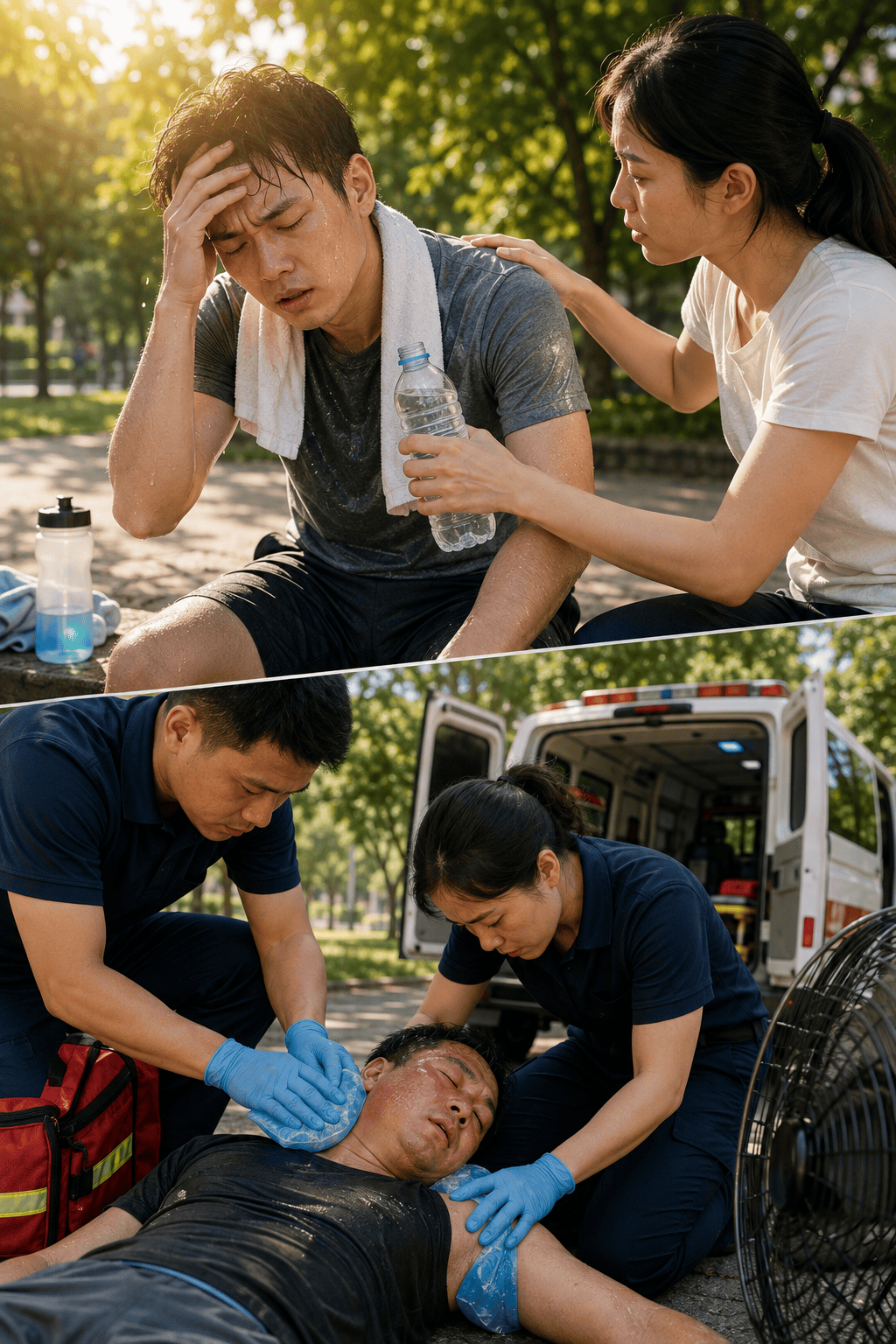
On scorching hot days, it’s common to feel drained, dizzy, or drenched in sweat after being outdoors or exercising too long. What many people don’t realize is that behind these seemingly ordinary symptoms could lie two very different conditions, with very different levels of danger: heat exhaustion and heat stroke.
Confusing the two doesn’t just lead to the wrong first-aid response — with heat stroke specifically, even a few minutes of delay can become life-threatening.
What Is Heat Exhaustion?
Heat exhaustion occurs when the body loses too much water and salt through excessive sweating — typically after intense physical activity or prolonged exposure to hot, humid conditions. It’s generally considered a warning stage that can progress into heat stroke if not addressed promptly.
Common signs:
- Heavy sweating, with skin that feels damp and cool
- Fatigue, lightheadedness, dizziness
- Headache, nausea, or vomiting
- Muscle cramps
- A fast but weak pulse
- Intense thirst
- Body temperature usually still below 40°C (104°F)
At this stage, the person is typically still alert and able to recognize that something is wrong.
What Is Heat Stroke?
Heat stroke is a genuine medical emergency, occurring when the body’s temperature-regulation system fails completely. At that point, the body loses its ability to cool itself down, causing core temperature to spike to dangerous levels — usually above 40°C (104°F) — with the potential to cause serious damage to the brain, heart, kidneys, and other organs if not treated immediately.
Warning signs:
- Very high body temperature, typically above 40°C (104°F)
- Skin that is hot, flushed, and dry (a key difference from heat exhaustion — the body has essentially stopped sweating)
- Confusion, agitation, rambling speech, or disorientation
- A fast, strong pulse
- Rapid, shallow breathing
- Severe headache
- Nausea and vomiting
- Seizures or loss of consciousness in severe cases
These signs indicate that the body has exceeded its ability to self-regulate and requires immediate emergency care.
Key Differences Between the Two
| Factor | Heat Exhaustion | Heat Stroke |
|---|---|---|
| Body temperature | Usually below 40°C (104°F) | Usually above 40°C (104°F) |
| Skin condition | Damp, cool, heavily sweating | Hot, flushed, dry (sweating stops) |
| Mental state | Alert | Confused, agitated, possibly unconscious |
| Urgency level | Rest and rehydration | Emergency medical care |
| Risk if untreated | Can progress to heat stroke | Life-threatening, multi-organ damage |
The easiest way to remember: damp skin usually points to heat exhaustion, while hot, dry skin is a warning sign of heat stroke.
What to Do for Suspected Heat Exhaustion
- Move the person to a cool, shaded, well-ventilated area, out of direct sunlight.
- Have them lie down and loosen tight clothing.
- Rehydrate with water, a light salt-and-sugar solution, or an electrolyte drink.
- Apply cool, damp cloths to the neck, armpits, and groin.
- Monitor closely for 30-60 minutes. If symptoms don’t improve or worsen, seek medical care.
What to Do for Suspected Heat Stroke
- Call emergency services immediately — this is a true emergency and should not be managed at home while waiting to “see if it improves.”
- While waiting for help, quickly move the person into shade or an air-conditioned space.
- Actively cool the body: remove excess clothing, apply cool or ice packs to the neck, armpits, and groin; use a fan or mist cool water on the skin if possible.
- Do not give anything to drink if the person is confused, unconscious, or not fully alert — the risk of choking is high.
- Continue monitoring until emergency responders arrive.
The Bottom Line
The line between heat exhaustion and heat stroke can sometimes feel thin, but the consequences of misjudging it are anything but small. Remembering the two key clues — skin condition (damp vs. dry) and level of alertness — can help you recognize the right condition and respond in time, especially during periods of extreme heat when the risk is highest.
This article is for general health information purposes only and does not replace diagnosis or treatment guidance from a qualified physician.