

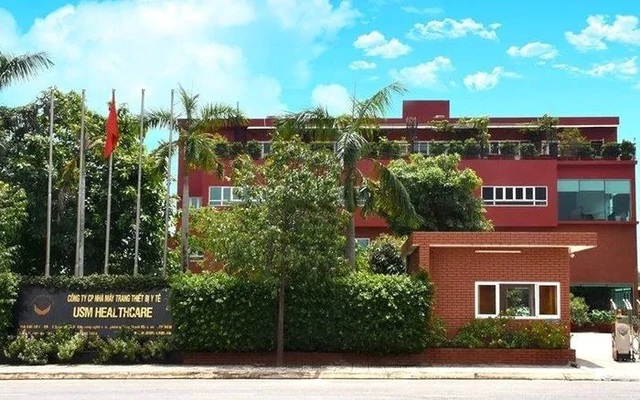
Key Development
On September 4, 2026, the Board of Directors of Nissha Co., Ltd. (Japan) adopted an official resolution approving the divestment and transfer of its entire 16.96 million shareholding—representing a 60% equity stake—in USM Healthcare Medical Device Factory JSC (USM Healthcare).
The divestiture occurs just over three months after Nissha formally completed the controlling acquisition on May 20, 2026, marking a swift unraveling of a cross-border healthcare transaction:
-
Original acquisition financial scale: Nissha allocated approximately 6.045 billion yen (exceeding VND 1,020 billion), comprising 5.8 billion yen for share purchases (~VND 980 billion) and 245 million yen (~VND 41 billion) in advisory, legal, and integration fees.
-
Transferee and purchasing party: Ms. Vo Xuan Boi Lam, Founder, Chief Executive Officer, and Board Member of USM Healthcare, who retained a 40% equity holding post-acquisition.
-
Phased divestment timeline:
-
Tranche 1: Transfer of a 50% equity stake targeted for completion by mid-September 2026.
-
Tranche 2: Transfer of the remaining 10% equity stake scheduled between mid-September 2027 and mid-September 2028.
-
-
Rationale cited by Nissha: During post-merger operational integration and initial preparation for financial consolidation, the Japanese group discovered inappropriate accounting practices predating the transaction. These primarily involved alleged “round-trip transactions”—arrangements where funds, inventory, or billing were cycled through multiple counterparty entities before returning to the originator, potentially misrepresenting booked revenues, trade receivables, and operational cash flows. Nissha continues an external forensic investigation and determined that continuing ownership compromises corporate value preservation.
-
Position issued by USM Healthcare: On September 8, 2026, USM Healthcare released a formal corporate communication stating that the entities encountered fundamental divergence in governance philosophy, executive decision-making velocity, and long-term strategic orientation. Consequently, founding shareholders initiated an offer to repurchase Nissha’s shares to restore strategic autonomy, without directly confirming or refuting the round-tripping allegations.
Why It Matters
-
Forensic due diligence risks in regional medtech acquisitions: The transaction underscores vulnerabilities in cross-border biopharmaceutical and medical technology M&A. Despite allocating over $1.6 million USD to professional transaction advisory services, core financial and revenue-recognition anomalies were identified only after post-closing management integration commenced.
-
Operational implications for domestic cardiovascular manufacturing: Established in October 2012 within the Saigon Hi-Tech Park (SHTP), USM Healthcare represents Vietnam’s sole domestic manufacturer possessing integrated capabilities spanning R&D, clinical validation, regulatory registration, and cGMP cleanroom manufacturing for coronary stents, PTCA balloon catheters, and orthopedic devices. Unwinding the transaction terminates USM’s anticipated technology transfer with Nissha’s medical divisions and its integration into global CDMO supply chains.
-
Reliability of baseline financial performance metrics: Pre-acquisition metrics disclosed for fiscal year 2025 indicated USM generated net revenue of VND 416.6 billion, net profit after tax of VND 28 billion, total assets of VND 1,138 billion, and equity of VND 832 billion. However, Nissha explicitly highlighted that these figures predate forensic auditing adjustments, raising questions regarding baseline commercial valuation.
Healthcare Insight Analysis
From the perspective of Healthcare Insight, Nissha’s abrupt exit from USM Healthcare on September 4, 2026, illustrates Post-Merger Accounting Discrepancies and Governance Divergence in Medtech M&A.
The transaction breakdown highlights three core corporate finance dynamics:
-
The mechanics and exposure of “round-trip” transactions: In the medical consumables sector, where products often move through consignment inventory models across hospital tenders, circular transactions with intermediary distributors can create artificial sales momentum. While such accounting maneuvers may present robust top-line growth during private funding rounds, they collapse under international financial reporting standards (IFRS / J-GAAP) required for public consolidation in Tokyo.
-
Compliance standards vs. entrepreneurial flexibility: Japanese industrial conglomerates prioritize statutory compliance, fiduciary transparency, and zero tolerance for accounting non-conformity. Confronted with unverified revenue loops, Nissha prioritized corporate governance integrity over sunk capital, choosing an immediate divestment exit to safeguard group standing.
-
Capital restructuring constraints in founder buybacks: Founder commitments to repurchase a 60% equity stake originally transacted near VND 1,000 billion impose significant financing demands. The structured two-stage divestiture (50% upfront, 10% deferred over 12–24 months) provides liquidity breathing room while USM seeks replacement domestic or regional strategic partners.
Market Implications
-
Financial impairment recognition on Nissha’s balance sheet: Nissha will reflect transaction accounting adjustments, including potential disposal gains or losses from the equity transfer, within its FY2026 consolidated financial disclosures.
-
Heightened forensic scrutiny across Vietnamese healthcare dealmaking: Foreign strategic and private equity investors will likely mandate expanded forensic audits, third-party distributor verification, and extended escrow retentions prior to closing healthcare acquisitions in Vietnam.
-
Procurement verification across public hospital cardiology tenders: Public health procurement boards and hospital purchasing committees may increase verification requirements regarding USM’s financial standing and supply chain stability during upcoming tenders for coronary intervention consumables.
Transaction Summary Matrix: Nissha / USM Healthcare Divestment Breakdown
| Analytical Parameter | Transaction Specifications & Structural Details | Strategic Significance & Industry Scope |
| Original acquiring entity | Nissha Co., Ltd. (Kyoto, Japan) | Acquired 60% controlling interest on May 20, 2026 |
| Aggregate transaction value | ~6.045 Billion Yen (>VND 1,020 Billion) | 5.8B Yen equity purchase + 245M Yen transaction fees |
| Repurchasing party | Ms. Vo Xuan Boi Lam (Founder, CEO) | Re-consolidates controlling interest alongside founders |
| Divestment transaction structure | 50% equity in Sept 2026; remaining 10% deferred | Provides execution window for capital restructuring |
| Core rationale cited by Nissha | Inappropriate pre-acquisition accounting, round-tripping | Cash and revenue circulation misrepresenting financials |
| Core rationale cited by USM | Disagreement on governance philosophy and strategy | Founders reclaim autonomy to pursue new partnerships |
| Strategic asset positioning | Cardiovascular stents, PTCA balloons, orthopedic lines | Sole domestic coronary stent manufacturer in Vietnam |
| Baseline FY2025 metrics | Revenue: VND 416.6B; NPAT: VND 28B; Assets: VND 1,138B | Subject to ongoing external forensic re-evaluation |