
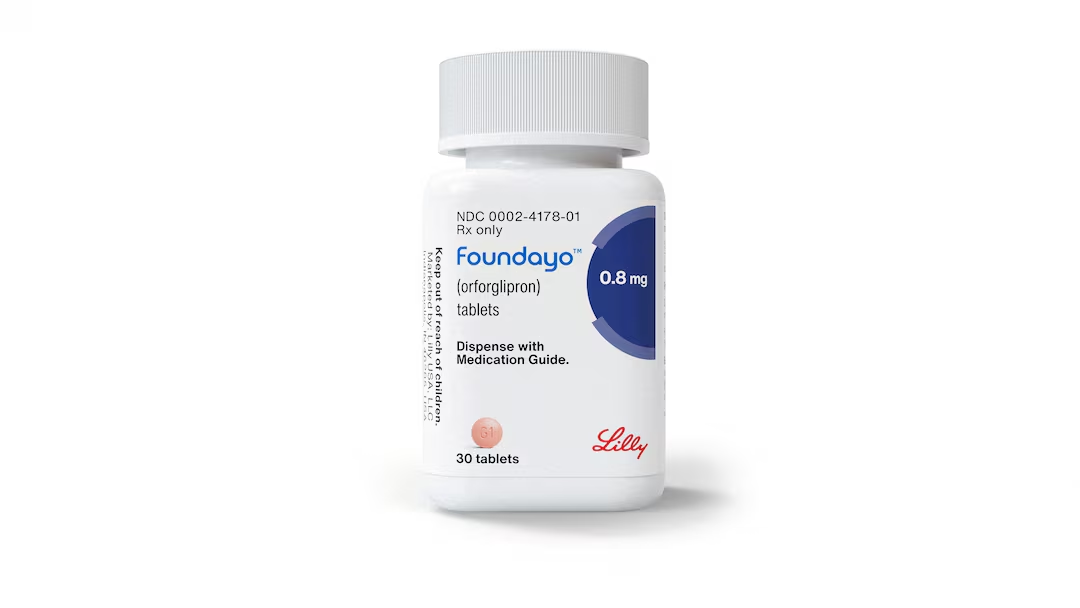
A competitive pricing strategy implemented for oral obesity medications developed by Novo Nordisk and Eli Lilly is altering the U.S. therapeutic landscape, driving patients to transition from custom compounded formulations toward branded options. According to clinical feedback, the cost structure established for the baseline entry doses of Novo’s oral Wegovy and Lilly’s Foundayo has dropped to a threshold directly comparable with alternative products mixed independently by compounding pharmacies. These oral alternatives represent a more affordable pathway compared to their respective injectable counterparts, providing a highly regulated option for individuals navigating a market where the U.S. FDA is tightening oversight constraints on unapproved compound mixes following the resolution of branded supply shortages.
The commercial parameters and therapeutic profiles distinguishing the two oral options outline the following variables:
-
Comparative Cost Matrix: Both Novo’s oral Wegovy and Lilly’s Foundayo feature initial pricing structures starting at approximately $149 per month. Conversely, proprietary injectable pens or solution vials from earlier generations command prices ranging from $199 to $299 or higher for self-paying consumer demographics.
-
Brand Placement and Dynamics: Oral Wegovy benefits from substantial baseline market familiarity due to sharing its identity with the well-known injectable predecessor, alongside leveraging verified clinical datasets that demonstrate robust cardiovascular protection. In contrast, Eli Lilly’s Foundayo, while perceived as a less familiar molecular architecture lacking mature heart-benefit data, offers an operational advantage by eliminating the strict fasting constraints required by its competitor.
-
Clinical Efficacy Margins: Independent clinical readouts indicate that oral Wegovy facilitates a 14% reduction in overall body mass over a 64-week duration, whereas Foundayo generates an 11% average reduction across 72 weeks (slightly below the 15% to 20% efficiency typically yielded by sub-cutaneous injections). Nevertheless, market forecasts indicate an eventual even split in long-term prescription volume between the two pill variations.
While these low-cost oral solutions are expanding the total addressable market to encompass new patient demographics who previously deferred GLP-1 therapy due to financial restrictions, systemic insurance coverage remains a formidable bottleneck. Specialized practitioners note that prior authorization requests face frequent denials by commercial insurers due to diagnostic coding discrepancies or a generalized reluctance to cover preventive weight management frameworks. To mitigate these access limits, drug manufacturers are actively negotiating integration with major pharmacy benefit managers. Furthermore, clinicians anticipate that the upcoming rollout of the U.S. government’s pilot program extending Medicare coverage for GLP-1 therapies — set to run from July 2026 through 2027 — will serve as a catalyst to broaden commercial insurance integration across the wider population.