

Key Development
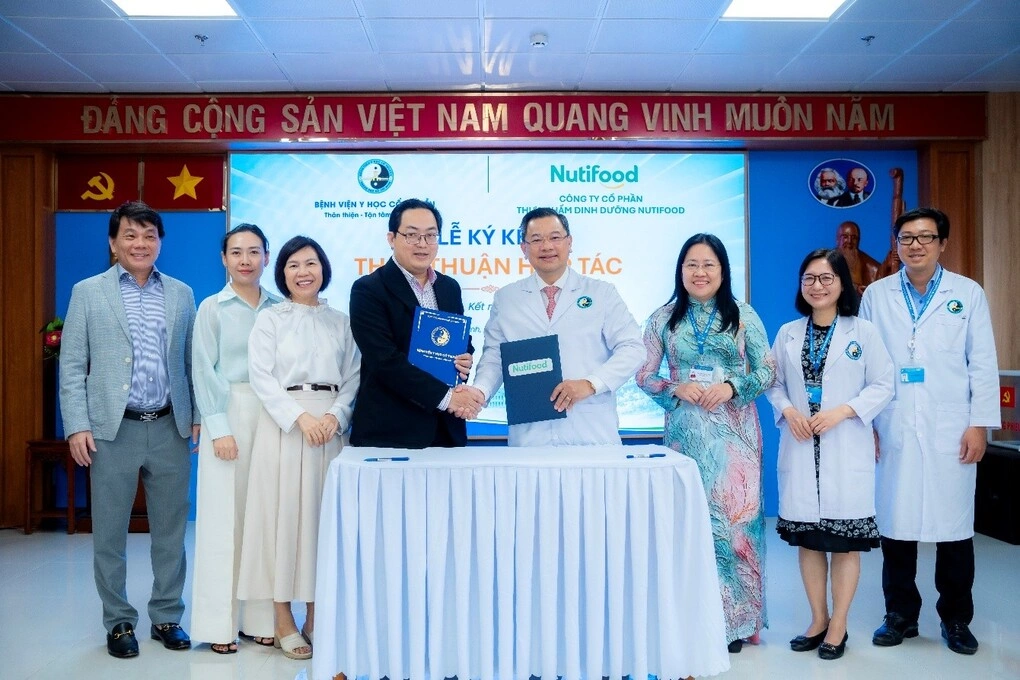
Nutifood has partnered with Ho Chi Minh City Traditional Medicine Hospital to develop nutrition products using Vietnamese medicinal plants. Beyond combining traditional medicine with modern nutrition, the strategic opportunity lies in transforming locally sourced botanical ingredients into standardized, scientifically validated and commercially scalable healthcare products.
Under the memorandum of understanding signed on October 9, 2026, Nutifood and its Nutrition Research Institute will contribute product development, technology and commercialization capabilities. The hospital will provide expertise in traditional medicine, medicinal plants and research resources, supported by its existing WHO-GMP-certified traditional medicine manufacturing operations.
The initial research will examine freeze-drying techniques for Ngoc Linh ginseng, particularly the preservation of valuable botanical compounds during processing. The collaboration follows Nutifood’s partnerships with other hospitals to strengthen the scientific foundation of its specialized nutrition portfolio.
Why It Matters
- Vietnamese medicinal plants could move beyond commodity ingredients, becoming the foundation for higher-value, research-based nutrition products.
- Hospital-industry partnerships connect traditional knowledge with scientific evaluation, potentially improving product credibility.
- Ingredient standardization is essential for commercialization, particularly when botanical composition varies across cultivation and processing conditions.
- Specialized nutrition creates opportunities for portfolio differentiation, but health claims must remain supported by appropriate evidence.
- Local botanical innovation may strengthen Vietnam’s healthcare value chain, from cultivation and processing to product development and distribution.
Healthcare Insight Analysis
Healthcare Insight believes this partnership represents a potentially important shift in how Vietnam commercializes its medicinal plant resources.
The strategic opportunity is not simply adding traditional herbs to nutritional products. It is converting botanical knowledge into reproducible, evidence-supported formulations that can compete in modern healthcare markets.
Vietnam possesses a substantial tradition of medicinal plant use.
But traditional recognition alone does not establish a commercially differentiated healthcare product.
Raw materials must be authenticated.
Active constituents must be characterized.
Processing methods must preserve quality.
Safety and relevant benefits must be evaluated.
Manufacturing must deliver consistent formulations.
The commercialization pathway is therefore:
botanical resources → ingredient standardization → scientific validation → product development → regulatory compliance → market adoption.
The proposed Ngoc Linh ginseng research illustrates why processing technology matters.
Freeze-drying may help preserve selected temperature-sensitive compounds, but the commercial significance depends on comparative testing, process reproducibility and stability.
Preserving a botanical compound is not equivalent to proving that the finished nutritional product improves health outcomes.
That distinction will determine the credibility of any future product positioning.
The partnership also creates an interesting division of capabilities.
The hospital brings medicinal plant expertise and clinical knowledge.
Nutifood provides nutrition formulation, manufacturing and distribution infrastructure.
Together, these capabilities could reduce the gap between laboratory research and commercial execution.
However, the collaboration is currently a research initiative—not evidence that a new formulation has demonstrated clinical efficacy or received market authorization.
The broader opportunity is product differentiation.
Nutrition markets increasingly require companies to explain why consumers should choose one formulation over another.
Locally sourced ingredients alone may provide brand identity, but defensible competitive advantage requires more.
Traceable sourcing + consistent quality + appropriate scientific evidence + commercial accessibility.
Nutifood’s existing hospital research collaborations could support this approach by integrating product development with clinical investigation.
Yet commercial expansion would introduce additional challenges, particularly if products target international markets.
Regulatory classification, permitted health claims, ingredient safety and quality requirements can differ significantly across jurisdictions.
For investors and healthcare executives, the decisive question is not whether Vietnamese medicinal plants possess commercial potential.
It is whether companies can turn that potential into standardized ingredients, validated products and sustainable margins.
Market Implications
Nutifood: could differentiate its nutrition portfolio through proprietary formulations, localized scientific research and stronger ingredient development capabilities.
Traditional medicine hospitals: may gain opportunities to translate research expertise into commercially relevant products while maintaining scientific independence.
Medicinal plant growers and processors: could benefit from demand for traceable, standardized raw materials and more sophisticated processing technology.
Nutrition and nutraceutical companies: may face higher competitive expectations around evidence, ingredient quality and substantiated product claims.
Healthcare investors: should assess intellectual property, supply-chain control, regulatory pathways and research outcomes before assigning commercial value to botanical innovation.
ANALYTICAL MATRIX
| Dimension | Current Signal | Opportunity | Key Risk |
| Strategic partnership | Nutifood–hospital MOU | Research-to-market integration | Execution uncertainty |
| Key ingredient | Ngoc Linh ginseng | Premium botanical differentiation | Raw material costs |
| Processing technology | Proposed freeze-drying research | Improved ingredient preservation | Unproven product-level benefits |
| Scientific validation | Joint safety and efficacy assessment | Stronger product credibility | Insufficient evidence |
| Commercialization | Nutrition R&D and distribution capabilities | Higher-value Vietnamese products | Regulatory and market-access barriers |
Nutifood is not merely exploring Vietnamese medicinal herbs. It is testing whether traditional botanical resources can become a scalable, science-driven nutrition platform.
If the partnership can connect ingredient standardization, meaningful evidence and commercial execution, it could create a pathway for moving Vietnamese medicinal plants further up the healthcare value chain.
However, botanical heritage by itself does not guarantee medical value or commercial success.
The broader industry signal is clear:
Vietnam’s next opportunity in botanical healthcare may come not from selling more raw ingredients, but from transforming them into validated, differentiated nutritional products.
Source: https://vnexpress.net/nutifood-hop-tac-phat-trien-san-pham-dinh-duong-tu-duoc-lieu-viet-5131614.html