

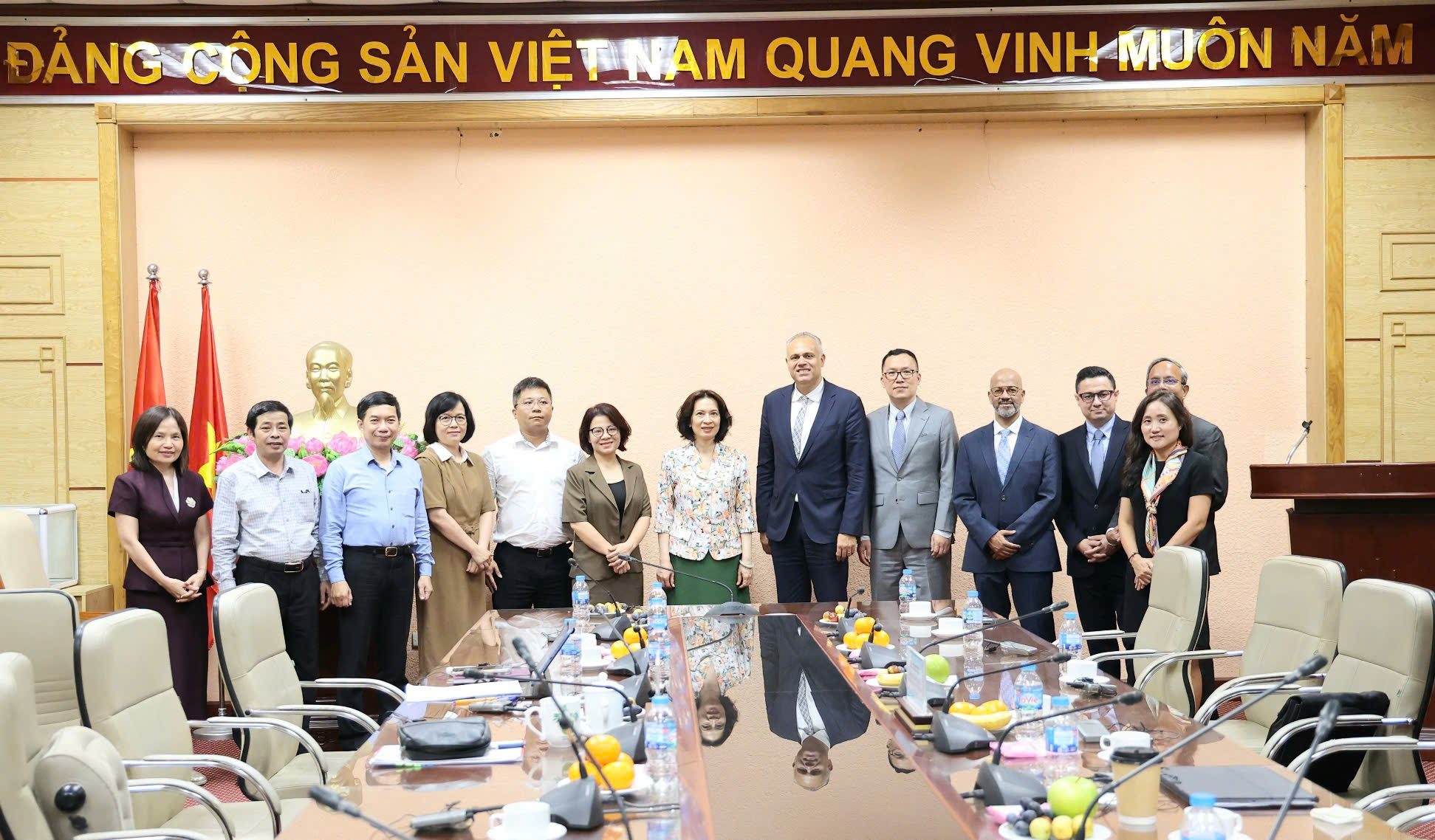
Key Development
On September 16, 2026, Vietnam’s Ministry of Health and senior Pfizer executives discussed a broad cooperation agenda spanning disease prevention, science and technology, vaccine self-reliance, access to innovative medicines, sustainable healthcare financing, antimicrobial resistance and technology transfer. The Ministry described these areas as aligned with Vietnam’s healthcare priorities for 2026–2030.
Significantly, the discussion went beyond introducing additional pharmaceutical products into Vietnam. The Ministry highlighted life-course vaccination, access to next-generation vaccines, stronger domestic research and manufacturing capacity, and improved patient access to advanced treatments in oncology, rare diseases and other high-burden conditions — while preserving the financial sustainability of the national health-insurance system.
The dialogue also has continuity. In 2024, Vietnam had already invited Pfizer to explore investment and technology transfer in biotechnology medicines, oncology and vaccine manufacturing. The recurrence of these themes in 2026 suggests the conversation is gradually moving beyond market entry toward long-term healthcare capability building.
Why It Matters
- Prevention is becoming a strategic healthcare market. Vietnam is strengthening immunization and moving toward a life-course approach, creating opportunities for vaccine innovation while raising questions around affordability and supply security.
- Access now extends beyond regulatory approval. For oncology, rare-disease and other advanced therapies, the practical barriers increasingly involve reimbursement, pricing, health technology assessment and long-term insurance affordability.
- Localization is evolving from manufacturing toward technology capability. Vietnam is signaling interest not simply in additional production capacity but in research, technology transfer and higher-value pharmaceutical manufacturing.
- Antimicrobial resistance links pharmaceutical innovation with system resilience. Surveillance, stewardship, infection control, laboratory capability and appropriate access to antibiotics all need to function as one ecosystem.
Healthcare Insight Analysis
The deeper significance of the meeting lies in how Vietnam is beginning to redefine what value a multinational pharmaceutical company is expected to bring to the market.
Traditionally, pharma–market relationships have focused heavily on registration, pricing, tenders and distribution. The Pfizer dialogue suggests a broader standard is emerging: long-term partners may increasingly be expected to contribute to access, technology transfer, professional capacity and public-health outcomes alongside commercial activity.
Vaccines illustrate this shift clearly. After COVID-19, vaccine security is no longer only about obtaining sufficient doses. It also concerns technological capability, resilient supply chains, manufacturing readiness and the ability to respond rapidly to future outbreaks.
Innovative medicines present a different challenge. Vietnam wants faster access to advances in oncology, rare diseases and other high-burden areas, yet every addition to reimbursement creates pressure on finite health-insurance resources.
The relevant strategic question therefore becomes less about whether a therapy can enter the country and more about how much measurable clinical value it creates relative to the healthcare resources it consumes.
That environment could increase the importance of health technology assessment, real-world evidence, negotiated-access approaches and potentially risk-sharing arrangements. However, the September meeting should not be interpreted as confirmation that any specific financing mechanism has already been adopted.
The same caution applies to technology transfer. The public account confirms interest and continued discussions, but it does not establish that Pfizer has committed to a Vietnamese manufacturing facility or that a specific vaccine-technology transfer agreement has been signed. The Ministry explicitly stated that proposals must still undergo scientific, legal, feasibility and resource assessment before implementation.
Market Implications
For multinational pharmaceutical companies, competitive positioning in Vietnam may increasingly depend on access strategy, local capability building and evidence generation, not simply the strength of the product portfolio.
For Vietnamese pharmaceutical and vaccine manufacturers, technology partnerships could provide a pathway into higher-value segments, but only if domestic companies can meet demanding standards in GMP, quality systems, technical talent and technology absorption.
For payers, growing demand for innovative medicines will strengthen the case for HTA, real-world evidence and reimbursement approaches that connect expenditure more closely with value.
For the broader healthcare ecosystem, the structural message is significant: Vietnam is increasingly evaluating global pharmaceutical partnerships not only by how many innovations enter the market, but by how much sustainable healthcare capability remains in the country afterward.