

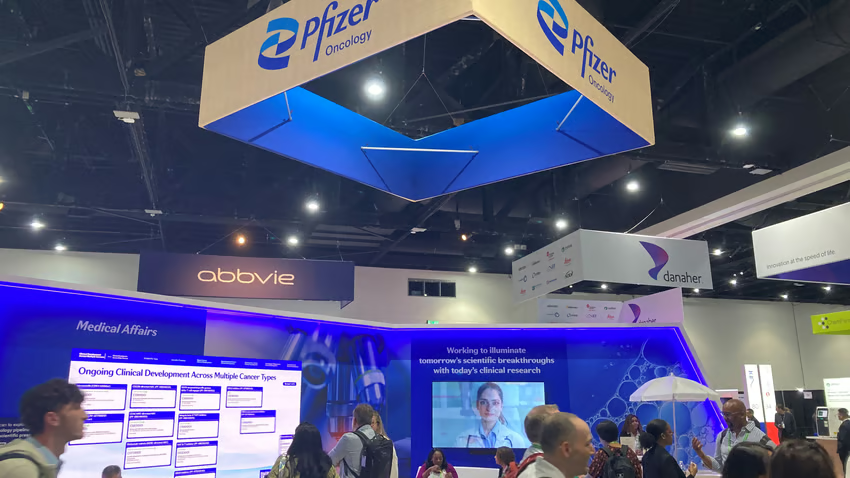
Pfizer has announced a major trimming of its clinical pipeline, marked by the total collapse of its $2.3 billion Trillium Therapeutics acquisition and the discontinuation of its only clinical-stage T-cell engager (TCE).
The failure of the Trillium bet The 2021 acquisition was centered on two CD47 inhibitors, designed to block the “don’t eat me” signal cancer cells use to evade immune destruction.
-
Final candidate scrapped: Following the removal of ontorpacept last year, Pfizer has now officially abandoned maplirpacept, the last remaining asset from the buyout.
-
Rationale: A spokesperson stated the move was a business decision within the context of Pfizer’s oncology portfolio and was not due to safety, regulatory, or study conduct issues.
-
Industry context: CD47 remains a high-risk target; despite massive investments across the sector, including Gilead’s high-profile $4.9 billion failure with magrolimab, no CD47-targeting drugs have reached the market.
Withdrawal from emerging modalities In a surprising move, Pfizer also called time on PF-08046052, an EGFR-targeting T-cell engager evaluated for advanced solid tumors. This exit comes at a time when the TCE modality is considered one of the hottest areas in pharmaceutical dealmaking.
Additional pipeline casualties Pfizer’s first-quarter 2026 financial results revealed other assets thrown on the scrapheap:
-
PF-08046037: An immunostimulatory drug conjugate.
-
PF-07905428: An investigational topical drug for acne treatment. The decision was based on a combination of Phase 1 results and broader pipeline prioritization efforts.