

Key Development
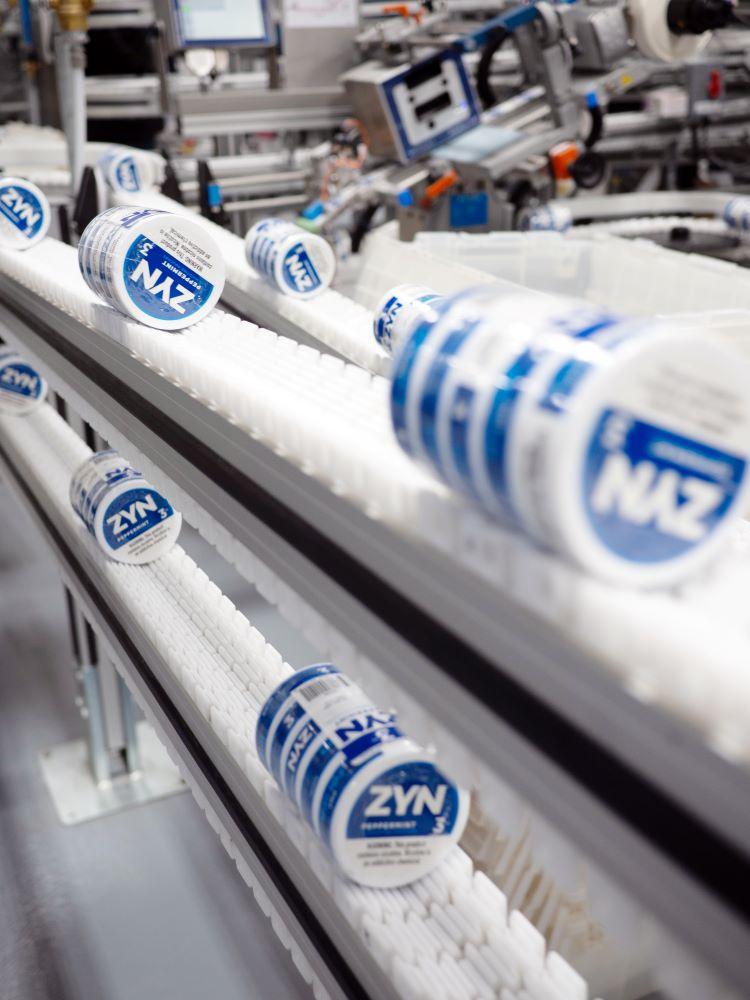
Philip Morris International (PMI) has doubled its planned investment in its Aurora, Colorado manufacturing campus to approximately US$1.2 billion, transforming the site into one of the company’s largest production hubs for Zyn nicotine pouches. The expanded investment will continue through 2028 and significantly increases production capacity to meet rising domestic and international demand for smoke-free nicotine products.
The Colorado campus forms part of PMI’s broader strategy to reposition its business beyond conventional cigarettes. The facility will not only supply the U.S. market but also support exports to Asia, Latin America, and the Caribbean, reinforcing the company’s long-term commitment to smoke-free product categories. The announcement follows recent regulatory momentum after the U.S. FDA authorized reduced-risk marketing claims for several Zyn nicotine pouch products, further strengthening market confidence in the category.
Rather than representing a routine manufacturing expansion, the investment reflects a structural transformation in how global tobacco companies are allocating capital as consumer preferences and regulatory environments increasingly favor alternatives to combustible cigarettes.
Why It Matters
- Smoke-free nicotine products are becoming the primary growth engine for the global tobacco industry.
- Manufacturing investment is increasingly concentrated in reduced-risk product portfolios.
- Regulatory recognition is accelerating commercial adoption of next-generation nicotine products.
- Supply chain resilience has become a strategic priority as demand continues to grow.
- Traditional tobacco companies are evolving into broader nicotine and consumer health businesses.
Healthcare Insight Analysis
From Healthcare Insight’s perspective, PMI’s expanded investment demonstrates that competition in the nicotine industry is shifting away from cigarette volume toward innovation, manufacturing capability, and regulatory differentiation.
Over the past decade, leading tobacco companies have steadily diversified into heated tobacco, nicotine pouches, and vaping products in response to changing consumer behavior and tightening tobacco regulations. Today’s competitive advantage depends less on legacy cigarette brands and more on the ability to develop, manufacture, and scale products positioned as potentially lower-risk alternatives for adult smokers.
The Colorado expansion also illustrates how manufacturing strategy is becoming a key competitive asset. By strengthening domestic production and export capacity, PMI is improving supply chain resilience while creating greater flexibility to respond to evolving demand across multiple international markets. Large-scale investments in advanced manufacturing are increasingly viewed as long-term strategic infrastructure rather than simple production expansion.
From a healthcare ecosystem perspective, the development highlights the growing intersection between regulation, harm reduction, and commercial strategy. While nicotine products continue to raise important public health concerns, regulators in several markets are increasingly distinguishing between combustible tobacco and scientifically assessed smoke-free alternatives. This evolving regulatory landscape is encouraging companies to accelerate investment in products designed to reduce exposure to harmful combustion-related chemicals, while remaining subject to strict oversight regarding youth access and long-term safety.
Market Implications
PMI’s investment is likely to intensify competition across the rapidly expanding nicotine pouch segment, prompting other global tobacco manufacturers to increase investment in reduced-risk product innovation, manufacturing capacity, and international distribution. Companies with strong regulatory capabilities and diversified smoke-free portfolios may gain a significant competitive advantage as the category continues to expand.
For healthcare and consumer health stakeholders, the announcement reflects a broader industry transition in which future growth will be increasingly driven by harm-reduction technologies, regulatory science, and advanced manufacturing rather than traditional cigarette sales alone.