

Key Development
Turning one vaccination encounter into five doses delivered six months apart would change far more than the injection itself. It would redesign the economics and logistics of childhood immunization.
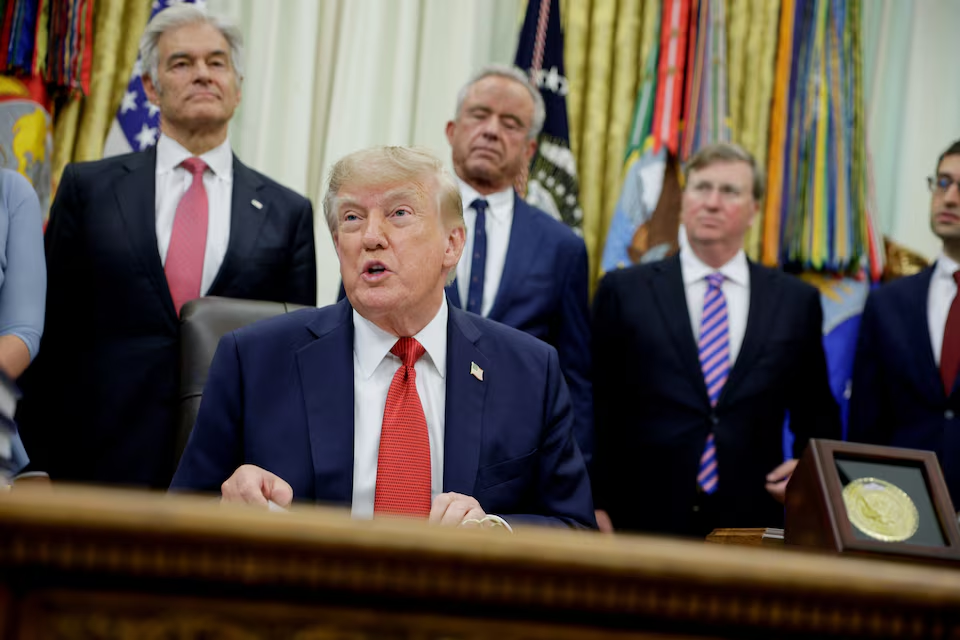
On September 18, 2026, U.S. President Donald Trump said his administration plans to require certain childhood vaccines to be divided into five separate doses administered at six-month intervals. Trump linked the proposal to reducing autism but presented no scientific evidence and did not identify which vaccines would be affected. Large bodies of scientific research have not established a causal relationship between vaccination and autism.
The announcement follows an August 10 executive order that restructured federal childhood-vaccine recommendations and instructed HHS to develop options for administering core vaccines as separate products, beginning with measles, mumps and rubella, while maintaining access to combination vaccines. Separate measles, mumps and rubella vaccines are currently not licensed in the U.S., meaning any large-scale move toward such products would require additional regulatory and supply-chain work.
Why It Matters
- More dosing events create more opportunities for patients to fall out of the schedule. CDC identifies fewer injections and fewer clinic visits as important advantages of combination vaccines, including improved timely vaccination and coverage.
- The safety question is distinct from the scheduling question. Combination vaccines undergo clinical evaluation for safety, immunogenicity and potential interference among components. FDA guidance specifically requires appropriate immunogenicity assessment. A new dosing structure would therefore need supporting evidence rather than an assumption that smaller or more widely spaced doses are inherently safer.
- Supply-chain complexity would increase. More separate products mean additional SKUs, forecasting requirements, inventory positions and cold-chain demands. CDC identifies lower shipping and stocking costs as one operational benefit of combination vaccines.
- Pediatric care becomes more resource-intensive. Additional appointments consume more clinician, nursing and parental time and create more opportunities for delayed protection.
Healthcare Insight Analysis
Healthcare Insight’s central view is that the market risks framing this debate too narrowly as “one shot versus five shots.”
For healthcare systems, the more important variable is series completion.
Vaccines create population-level value only when children receive adequate protection at the appropriate time. Combination products became operationally important partly because they reduce the number of encounters required to protect against multiple diseases. Fewer encounters mean fewer opportunities for a family to miss a visit, encounter transportation barriers or postpone care.
Current CDC guidance states that administering multiple recommended vaccines at the same visit has been shown to be safe and that there are no data supporting arbitrary spacing as a safer or more effective strategy for protection. The American Academy of Pediatrics generally prefers combination products over equivalent separate injections when clinically appropriate because they reduce injection burden.
That does not mean every combination product is preferable in every circumstance. Product-specific evidence matters. CDC, for example, notes a modestly higher risk of febrile seizures with the first MMRV dose in younger children compared with giving MMR and varicella separately, which is why recommendations differ in that setting.
This distinction is critical. Evidence-based vaccine policy is not simply “combined is better” or “separate is safer.” It depends on the safety, immunogenicity, timing and benefit-risk profile of each specific product.
The underappreciated issue is what happens commercially if federal policy forces a substantial redesign.
Manufacturers could face new formulation work, clinical studies, regulatory filings, manufacturing allocation and inventory requirements. In the case of MMR, Reuters notes that separate component vaccines are not currently licensed in the United States.
A policy that appears to modify a vaccination schedule could therefore become something larger: a redesign of the U.S. pediatric-vaccine market architecture.
Market Implications
Vaccine manufacturers: potentially higher regulatory and production complexity if separate products or new dosing regimens are required.
Hospitals and pediatric practices: more visits, greater scheduling burden and more complicated immunization tracking.
Payers and public programs: the relevant calculation would need to include total episode cost — not simply vaccine price, but additional visits, procurement complexity and any effect on completion rates.
Regulators: the most important next signal is whether HHS and FDA develop product-specific protocols supported by immunogenicity, safety and clinical evidence, and whether manufacturers are formally asked to develop separately licensed products.
For the healthcare ecosystem, the decisive question is therefore not how many injections a child receives. It is whether a redesigned schedule produces better protection once adherence, access, operational cost and scientific evidence are considered together.