

Key Development
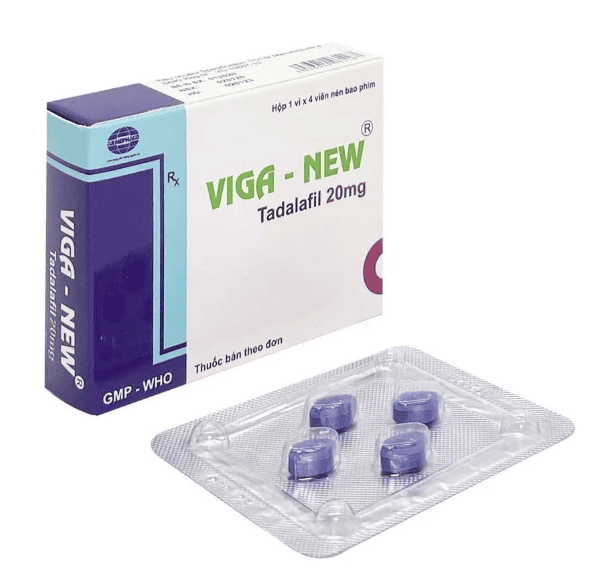
Hanoi’s Department of Health has ordered the recall of a batch of Viga (tadalafil 20 mg) film-coated tablets after laboratory testing identified a failure to meet the registered in-house dissolution specification. Beyond the individual recall, the case highlights a fundamental pharmaceutical manufacturing challenge: a medicine’s therapeutic value depends not only on its active ingredient and labeled strength, but also on how reliably its formulation releases that ingredient.
The affected product, manufactured by 120 Armephaco One Member Limited Company, carries batch number 012025, registration number 893110916124, a manufacturing date of April 2, 2025, and an expiry date of April 2, 2028. The National Institute of Drug Quality Control documented the failed result in its October 6, 2026 correspondence, and the violation was classified as Level 3 under Circular 30/2025/TT-BYT.
Authorities have required the manufacturer and distributor to initiate recall notifications within two days, report recall completion within 18 days and arrange additional testing at no fewer than two facilities. The finding concerns the sampled batch and does not establish that every Viga product or batch is defective.
Why It Matters
- Dissolution is a critical pharmaceutical quality attribute, influencing the release of active ingredients from solid oral dosage forms.
- A labeled dose does not guarantee consistent drug release, making formulation performance essential to product reliability.
- Batch-level traceability determines recall effectiveness, connecting manufacturers, distributors, pharmacies and patients.
- Quality failures create financial exposure beyond the affected inventory, including investigations, replacement costs and reputational consequences.
- Pharmaceutical competitiveness increasingly depends on manufacturing consistency, not only pricing and market access.
Healthcare Insight Analysis
Healthcare Insight believes the Viga recall illustrates a broader issue in pharmaceutical quality governance.
The true value of a medicine is not simply that it contains the correct active pharmaceutical ingredient. It must consistently deliver that ingredient through a formulation whose quality has been demonstrated.
For solid oral medicines, therapeutic performance depends on several interconnected factors.
The active ingredient must meet specifications.
The formulation must remain stable.
The tablet must release its contents appropriately.
Manufacturing processes must remain controlled.
Finished batches must satisfy quality standards.
The manufacturing value chain is therefore:
API quality → formulation performance → dissolution consistency → product quality assurance → patient confidence.
Dissolution testing plays a particularly important role because it measures how a drug substance is released from a dosage form under defined laboratory conditions.
A result outside specification may indicate issues involving formulation, manufacturing or product stability.
However, a failed dissolution test does not by itself establish the magnitude of any clinical impact on patients.
Additional investigation is necessary to identify the root cause and assess its implications.
This distinction matters for pharmaceutical quality management.
A recall addresses the immediate distribution risk.
But preventing recurrence requires a more comprehensive process.
Detection → batch containment → root-cause investigation → corrective action → effectiveness verification.
The additional sampling requested by Hanoi authorities reflects the importance of understanding whether the problem is confined to the tested material or requires broader investigation.
For manufacturers, the economic consequences can extend well beyond the monetary value of one batch.
Quality failures may create testing costs, reverse logistics expenses, inventory losses, production interruptions and additional regulatory scrutiny.
They may also weaken confidence among distributors and healthcare professionals.
For generic pharmaceutical manufacturers, this can become a competitive issue.
Price remains important, but sustainable market access depends on consistent product performance.
Lower manufacturing costs create commercial advantage only when quality remains reliably controlled.
Digital batch records, validated production processes, stability monitoring and supplier qualification can support stronger quality systems.
Yet technology cannot substitute for effective quality governance.
The strategic KPI is therefore not simply the percentage of batches released successfully.
It is the ability to detect deviations early, investigate their causes and prevent recurring failures.
Market Implications
120 Armephaco: must execute the affected-batch recall, investigate the dissolution failure and demonstrate appropriate corrective measures.
Pharmaceutical distributors: need accurate batch-level inventory records and rapid reverse-logistics processes to support recall execution.
Pharmacy chains and hospitals: should strengthen batch identification, inventory isolation and communication procedures for affected medicines.
Generic drug manufacturers: face an increasingly important competitive requirement to demonstrate consistent quality throughout the product lifecycle.
Healthcare investors: should examine manufacturing quality systems, recall history, regulatory inspection findings and remediation capabilities alongside revenue and margins.
ANALYTICAL MATRIX
| Dimension | Current Signal | Opportunity | Key Risk |
| Product quality | Dissolution test failure | Improve formulation controls | Inconsistent drug release |
| Regulatory action | Level 3 violation | Strengthen quality oversight | Broader corrective requirements |
| Batch traceability | Batch 012025 recalled | Faster identification and isolation | Incomplete distribution records |
| Manufacturing governance | Additional sampling required | Root-cause investigation | Recurring deviations |
| Commercial performance | Batch-level withdrawal | Rebuild quality confidence | Recall costs and reputational damage |
The Viga recall is not simply a case of one pharmaceutical batch failing a laboratory specification. It is a reminder that reliable medicine manufacturing requires control over how a product performs—not merely what its label declares.
For pharmaceutical companies, quality consistency is both a patient-safety responsibility and an economic asset.
The next competitive advantage will belong to manufacturers capable of combining formulation expertise, reliable production controls and rapid quality-risk management.
The broader industry signal is clear:
pharmaceutical quality is moving from a final-stage testing requirement toward a strategic foundation of manufacturing credibility and sustainable market access.
Source: https://vietq.vn/thu-hoi-lo-thuoc-viga-tadalafil-20-mg-khong-dat-tieu-chuan-chat-luong-d244837.html