

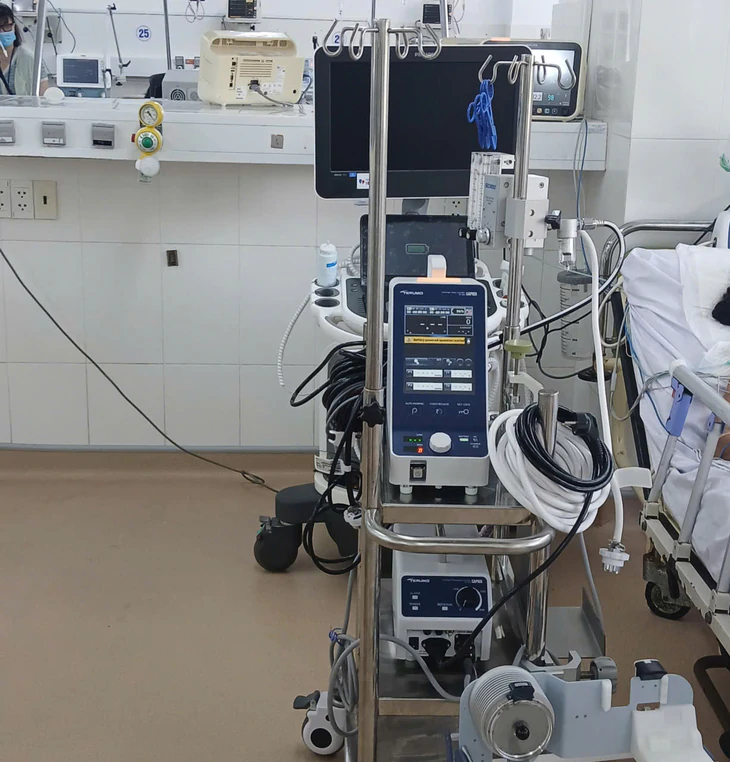
Key Development
Khanh Hoa General Hospital has deployed ECMO clinically for the first time, supported by specialists from Hanoi Medical University Hospital. The 19-year-old patient developed severe respiratory failure, myocardial injury, acute liver failure and multiorgan dysfunction. After more than 48 hours of ECMO-supported intensive care, her clinical indicators improved; by October 13, she was conscious, hemodynamically stable and no longer required mechanical ventilation.
The significance extends beyond a single patient outcome. In June 2026, Khanh Hoa’s health sector and Hanoi Medical University Hospital established a 2026–2029 cooperation program covering workforce development, advanced technology transfer, remote consultation and technology application. The ECMO case therefore provides an early test of whether that cooperation can translate institutional agreements into functioning clinical capability.
Why It Matters
- Khanh Hoa has moved from equipment readiness to clinical execution. For ECMO, operating capability matters more than equipment ownership.
- Direct bedside transfer can shorten the learning curve. Local physicians performed the procedure with hands-on specialist support rather than relying only on theoretical training.
- Advanced critical-care capacity can reshape referral pathways, particularly when severely unstable patients cannot safely tolerate long-distance transfer.
- The milestone supports Khanh Hoa General Hospital’s regional role, with health-system planning identifying the hospital among facilities serving regional functions in South Central Vietnam and the Central Highlands.
- ECMO requires ecosystem investment, including ICU staffing, laboratories, blood products, consumables and continuous specialist coverage.
Healthcare Insight Analysis
The deeper significance of Khanh Hoa’s first ECMO case is not simply the introduction of another medical technology. It signals a potential redistribution of advanced critical-care capability across Vietnam’s healthcare network.
ECMO has traditionally been concentrated in major tertiary institutions because safe operation requires substantial expertise and multidisciplinary coordination. Khanh Hoa illustrates a different model: instead of transferring every critically ill patient to an established center, expertise can be transferred to the regional hospital first, with local teams progressively assuming greater responsibility.
This distinction separates technology transfer from equipment procurement.
Owning an ECMO platform does not create an ECMO program. Sustainable capability requires appropriate patient selection, cannulation expertise, anticoagulation management, hemodynamic control, respiratory management, complication surveillance and timely weaning. In Khanh Hoa’s first case, direct specialist supervision provided practical experience that classroom training alone cannot replicate.
The development also fits a wider national trend. Information released in September 2026 indicated that ECMO now helps save approximately 1,000 patients annually in Vietnam, suggesting that the technology is gradually moving beyond a limited group of major tertiary centers.
The next challenge is therefore not simply acquiring more machines. Hospitals need sufficient case volume to preserve skills, standardized protocols, round-the-clock staffing and dependable specialist referral networks.
Market Implications
For provincial hospitals, establishing ECMO capability can support the transition from general hospitals toward regional critical-care hubs, enabling more complex patients to remain within local systems.
For the MedTech industry, the opportunity extends beyond capital equipment. Sustainable ECMO programs create recurring demand for oxygenators, cannulas, monitoring technologies, laboratory support, blood-management solutions, ICU consumables, maintenance and training.
More broadly, hospital competition may increasingly shift from how much technology a facility owns to how reliably it can operate complex clinical platforms and deliver consistent outcomes.
Analysis Matrix
| Dimension | Current Signal | Analysis |
| Clinical capability | First clinical ECMO deployment | Khanh Hoa has moved from technical preparation to real-world execution |
| Workforce | Direct specialist support | Bedside transfer can accelerate independent local capability |
| Referral pathway | Critical patient treated locally | Potential to reduce dependence on tertiary transfers |
| Infrastructure | ECMO requires a full ICU ecosystem | Investment value extends far beyond the machine itself |
| Regional strategy | Hospital positioned for a broader regional role | Advanced critical care strengthens its potential referral-hub function |
| MedTech | Growing need for consumables and services | Long-term value may come increasingly from recurring ecosystem demand |
Conclusion
Khanh Hoa’s first ECMO case matters not only because of its clinical outcome, but because it demonstrates that tertiary-level technology can become functioning regional capability when equipment is combined with structured expertise transfer.
If the hospital can maintain training, adequate case exposure, 24/7 staffing and strong links with tertiary specialists, ECMO could become one of the capabilities supporting its evolution into a more important regional critical-care center.
The broader lesson for Vietnam’s healthcare system is therefore straightforward: closing regional gaps in advanced care requires more than decentralizing equipment — operational capability must move with the technology.