

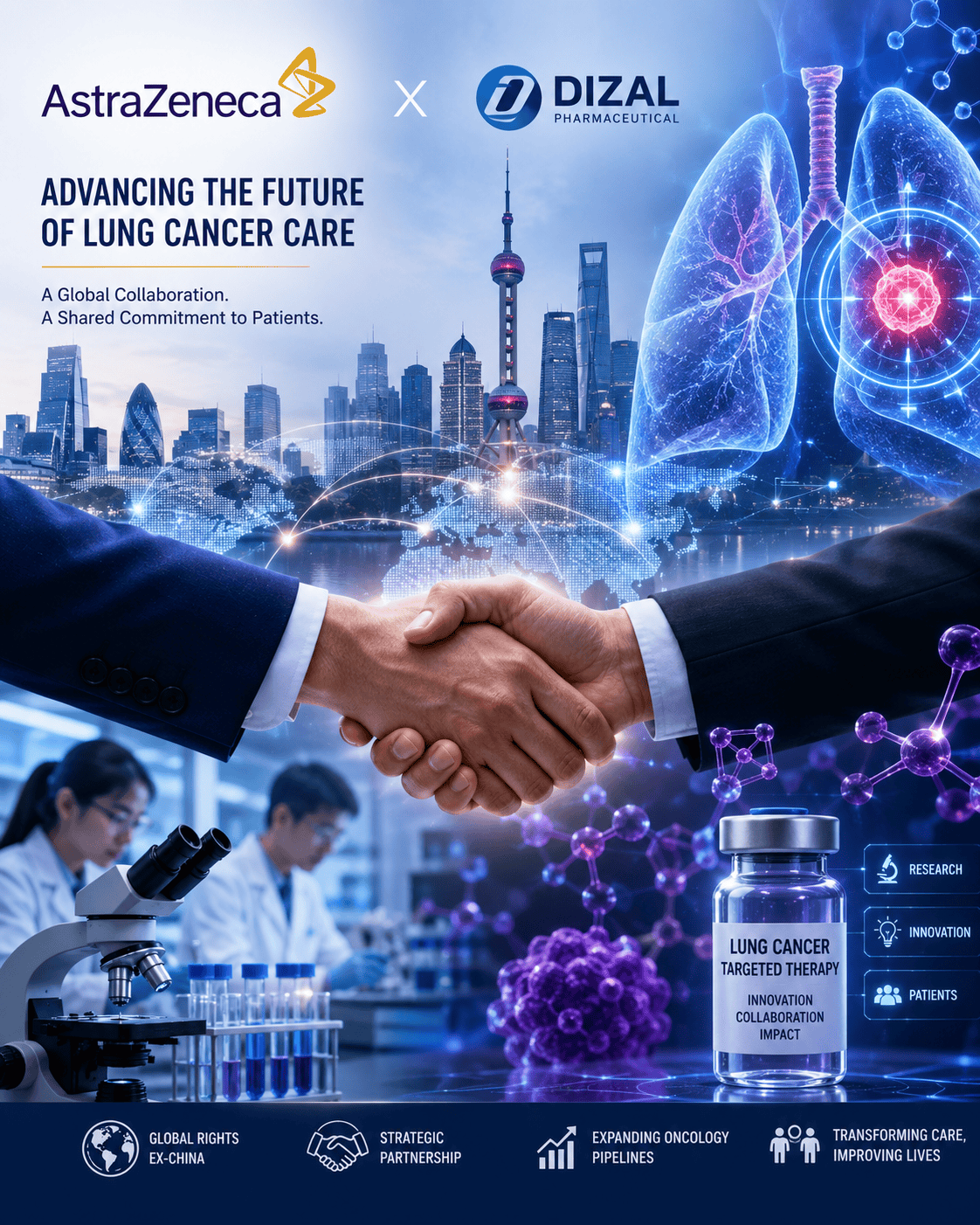
AstraZeneca has expanded its oncology pipeline through a new licensing agreement with Dizal Pharmaceutical, securing global rights outside mainland China for an investigational targeted therapy for lung cancer. The transaction reflects the growing confidence multinational pharmaceutical companies have in China’s rapidly evolving biotechnology sector, where innovative drug discovery is increasingly competing on the global stage.
The agreement goes beyond a traditional licensing transaction. It highlights a strategic shift in how global pharmaceutical companies access innovation. Rather than relying primarily on internal research or acquisitions, leading drugmakers are increasingly partnering with emerging biotechnology companies to strengthen pipelines while sharing development risks and accelerating access to promising therapies.
The collaboration also reinforces AstraZeneca’s long standing commitment to China, a market that has become both a major commercial opportunity and an increasingly important source of scientific innovation.
Why It Matters
- China is rapidly transitioning from a manufacturing base to a global source of pharmaceutical innovation.
- Licensing agreements are becoming a preferred strategy for expanding oncology pipelines with lower development risk.
- Lung cancer remains one of the largest areas of unmet medical need, creating significant commercial opportunities for innovative targeted therapies.
- Cross border partnerships are accelerating global access to promising medicines developed by Chinese biotechnology companies.
- Competition for high quality oncology assets continues to intensify across the pharmaceutical industry.
Healthcare Insight Analysis
The AstraZeneca and Dizal agreement reflects a structural shift in the global pharmaceutical innovation ecosystem. Over the past decade, China has evolved from a market primarily associated with generic manufacturing and local commercialization into one of the world’s fastest growing centers for innovative drug research.
This transformation has been driven by sustained investment in biotechnology, regulatory reforms, stronger clinical research capabilities, and a rapidly expanding pool of scientific talent. As a result, Chinese biotechnology companies are producing increasingly competitive first in class and best in class therapies that are attracting attention from multinational pharmaceutical companies.
For global drugmakers, licensing has become an efficient strategy for accessing innovation without assuming the full cost and uncertainty of early stage research. By partnering with specialized biotechnology companies, pharmaceutical leaders can diversify their pipelines, accelerate development timelines, and improve capital allocation while maintaining strategic flexibility.
For AstraZeneca, the partnership is also consistent with its broader oncology strategy. The company has built one of the industry’s strongest cancer portfolios through a combination of internal innovation, acquisitions, and targeted licensing agreements. Strengthening its lung cancer pipeline remains particularly important as precision medicine continues to redefine treatment standards through biomarker driven therapies.
The broader implication is that pharmaceutical innovation is becoming increasingly decentralized. Future breakthrough therapies are likely to emerge from a diverse global network of biotechnology companies rather than a small group of multinational research organizations. Companies capable of identifying and securing high value external innovation will gain a meaningful competitive advantage.
Market Implications
The agreement signals continued momentum in cross border pharmaceutical partnerships, particularly between multinational companies and Chinese biotechnology innovators.
Investors should expect licensing activity to remain strong as pharmaceutical companies compete for differentiated oncology assets with global commercial potential. China is also likely to strengthen its position as a strategic source of innovative medicines, increasing its influence across the global biopharmaceutical value chain.
For the healthcare ecosystem, collaborations of this nature will accelerate technology transfer, expand patient access to advanced therapies, and reinforce the importance of international innovation partnerships in shaping the future of oncology.