

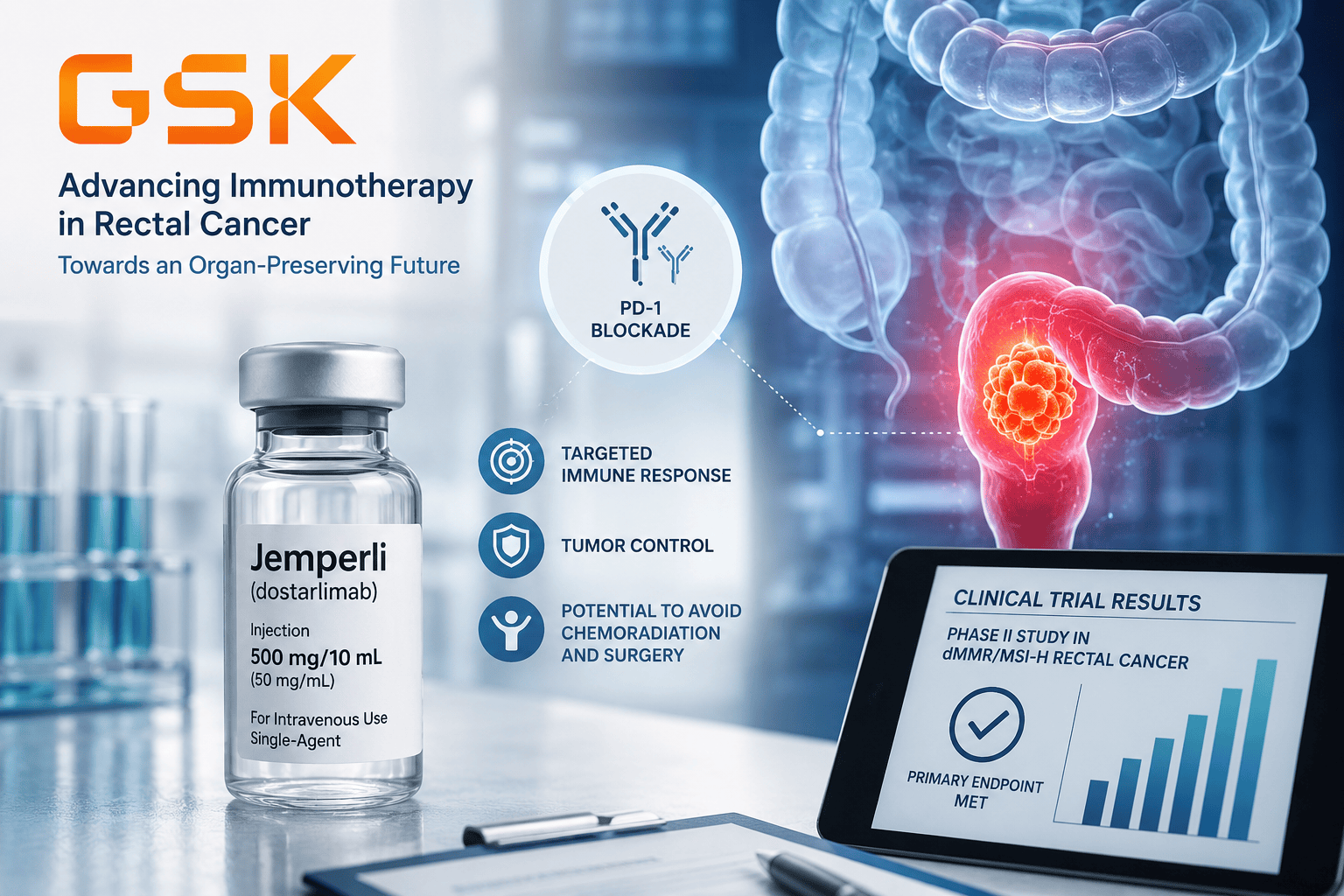
GSK has reported encouraging Phase II clinical results for Jemperli (dostarlimab) in patients with locally advanced mismatch repair deficient (dMMR) and microsatellite instability high (MSI H) rectal cancer. A substantial proportion of participants achieved sustained complete clinical responses after immunotherapy alone. The findings add to growing evidence that carefully selected patients may avoid conventional combinations of chemotherapy, radiation, and surgery.
While immunotherapy has transformed the treatment of advanced cancers over the past decade, its application in earlier stages of disease has become one of oncology’s most important frontiers. Researchers are increasingly focused on treatment strategies that eliminate tumors while preserving organ function and minimizing long term complications.
For GSK, the study represents more than another positive clinical milestone. It strengthens the company’s oncology strategy and reinforces the growing importance of biomarker guided therapies in future cancer care.
Why It Matters
- Organ preserving treatment strategies are becoming one of the fastest growing areas of oncology innovation.
- Biomarker guided medicine continues to reshape cancer treatment by identifying patients most likely to benefit from immunotherapy.
- Positive clinical data could significantly expand Jemperli’s commercial opportunity beyond its current approved indications.
- Earlier use of immunotherapy may reshape treatment pathways and reduce the need for highly invasive procedures in selected patients.
- The findings reinforce precision oncology as both a clinical priority and an economic opportunity for healthcare systems.
Healthcare Insight Analysis
The significance of these results extends far beyond a successful Phase II study. They reflect a broader transformation in oncology. The industry is shifting from treating cancer as aggressively as possible to delivering equally effective therapies that preserve quality of life and reduce long term complications.
Historically, patients with locally advanced rectal cancer have been treated with combinations of chemotherapy, radiation, and surgery. Although these approaches have improved survival, they frequently result in permanent bowel dysfunction, urinary complications, sexual impairment, or lifelong dependence on a stoma. Today, healthcare systems increasingly measure treatment success by both survival outcomes and long term patient wellbeing.
This evolution is closely linked to the rise of precision medicine. Rather than applying one standard treatment to every patient, oncologists are using genomic biomarkers such as dMMR and MSI H to identify individuals whose tumors respond exceptionally well to immune checkpoint inhibitors. As molecular diagnostics become more widely available, personalized treatment decisions are expected to become routine clinical practice.
The commercial implications are equally significant. Oncology remains one of the pharmaceutical industry’s most competitive therapeutic markets. Companies are investing aggressively to move immunotherapies into earlier disease settings where patient populations are larger and opportunities for long term value creation are greater. Successfully expanding immunotherapy from metastatic disease into potentially curative settings represents both a scientific breakthrough and an important growth opportunity.
For healthcare providers, this trend will accelerate investment in molecular pathology, companion diagnostics, multidisciplinary cancer care, and real world outcome monitoring. These capabilities will become essential infrastructure for delivering precision oncology at scale.
Market Implications
If future confirmatory studies validate these findings, the healthcare industry could experience several important changes.
- Wider adoption of universal biomarker testing at the time of diagnosis.
- Greater demand for precision diagnostics integrated into routine oncology practice.
- Increased investment in organ preservation programs across leading cancer centers.
- Stronger competition among immunotherapy developers targeting earlier stage cancers.
- Growing interest from payers in therapies that reduce long term surgical and supportive care costs.