

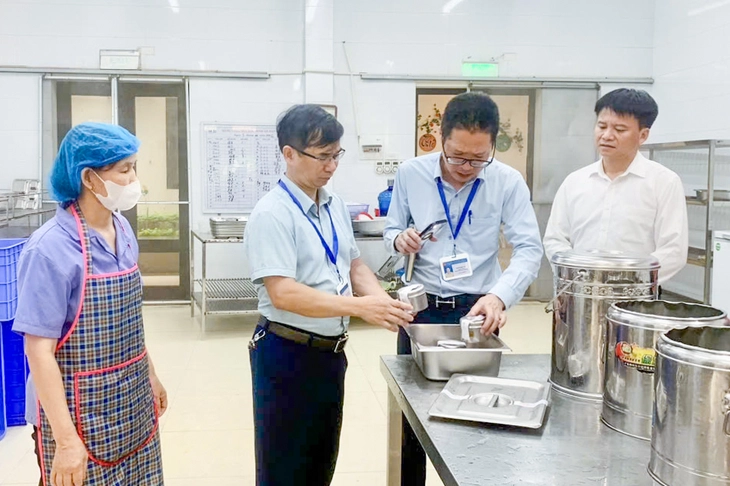
In the draft policy for the amended Law on Food Safety, the Ministry of Health has introduced groundbreaking proposals to unify the administrative apparatus for food safety from central to local levels, addressing current inter-agency overlaps.
Unifying the Central Management Apparatus The Ministry of Health proposes establishing a unified food safety management agency directly under the Ministry. This entity would serve as the primary focal point for state management functions, replacing the current model where responsibilities are fragmented across three ministries: Health, Industry and Trade, and Agriculture and Rural Development.
Two Scenarios for Provincial Organization To ensure consistency across the entire food chain, the Ministry has outlined two options for provinces and cities:
-
Option 1 (Establishing a Department of Food Safety): Merging functions, personnel, and facilities related to food safety from the Departments of Health, Industry and Trade, and Agriculture and Rural Development into a single specialized Department. This model draws on the pilot experience of Ho Chi Minh City’s Department of Food Safety, offering greater autonomy in inspections, penalties, and financial management.
-
Option 2 (Upgrading the Food Safety Bureau): Maintaining the existing Bureau under the Department of Health while absorbing duties and personnel from related Departments. The advantage is avoiding the creation of new high-level leadership positions, though it may face challenges in inter-departmental coordination.
Strengthening Enforcement at the Grassroots Level At the commune level, the draft suggests forming Food Safety Teams as public service units under the Commune People’s Committee. These teams will be responsible for direct on-site inspection, monitoring, and handling administrative violations, in collaboration with local health stations and relevant offices.
This reform is expected to clearly separate risk assessment and risk management functions while efficiently utilizing existing resources without causing major disruptions to the political system.