

Key Development
Ori Biotech has entered into a 10-year strategic collaboration with an undisclosed biopharmaceutical company, with the agreement valued at up to $120 million across services, milestones, equipment and consumable purchases. Rather than representing a $120 million upfront payment, the structure ties long-term economic value to implementation and adoption of Ori’s IRO® manufacturing platform within a commercial autologous cell therapy process.
The strategically important element is not the headline value but the planned comparability exercise between the IRO process and the partner’s existing commercial manufacturing process. Introducing a new manufacturing platform into an established commercial cell therapy requires far more than equipment installation: process performance, product quality and CMC consistency must remain sufficiently controlled throughout the transition.
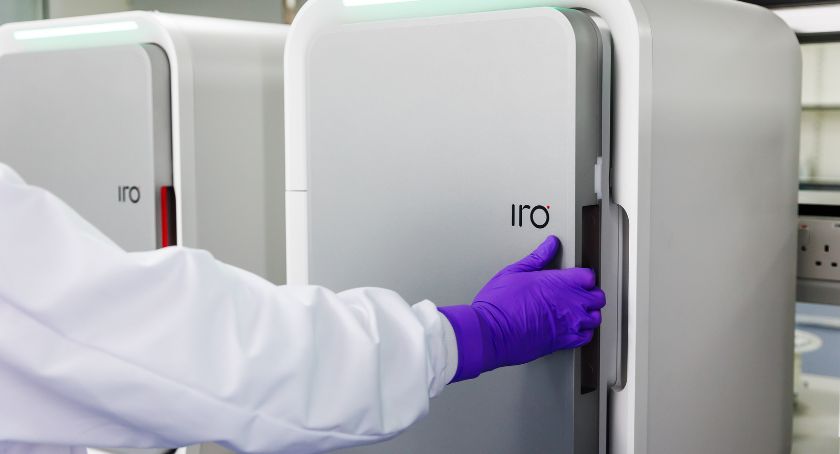
IRO combines hardware, consumables, software and data analytics within a closed manufacturing system intended to reduce manual intervention, increase throughput and standardize production. The platform received FDA Advanced Manufacturing Technology designation in 2025, while the FDA’s AMT program is designed to encourage technologies that can improve manufacturing reliability, product quality and supply resilience.
Why It Matters
- Manufacturing is becoming a competitive asset. Autologous cell therapies remain constrained by high costs, labor-intensive processes and limited scalability.
- Automation is moving into commercial infrastructure. A decade-long agreement suggests automated manufacturing is increasingly being treated as core production architecture rather than an R&D tool.
- The economics could materially change. Closed manufacturing can reduce manual interventions, cleanroom requirements and operational complexity while improving facility utilization.
- Comparability remains the critical gatekeeper. Technology efficiencies matter only if product quality and regulatory requirements survive the process transition.
Healthcare Insight Analysis
The agreement reflects a broader evolution in advanced therapies: commercial success increasingly depends not only on what the therapy can do clinically, but on whether it can be manufactured repeatedly, reliably and economically at scale.
For autologous therapies, every patient effectively creates an individual manufacturing lot. As volumes rise, traditional workflows that depend heavily on skilled operators, multiple unit operations and controlled cleanroom environments can create a near-linear increase in operational burden.
Closed automation offers a different model: manufacturing capacity can potentially scale through standardized units, software-controlled processes and more intensive use of facility space rather than simply adding people and cleanrooms.
Yet recent industry experience also demonstrates that automation is not automatically transferable into commercial production. In August 2026, Bristol Myers Squibb ended an arrangement involving Cellares and Breyanzi after BMS concluded the platform could not meet the commercial-scale manufacturing requirements for that product; Cellares disputed that assessment.
That context makes Ori’s latest agreement particularly important.
The true milestone will not be the $120 million potential contract value. It will be whether IRO can successfully complete technology transfer, demonstrate comparability, sustain GMP performance and ultimately manufacture meaningful commercial volumes.
Success would provide an important validation for a much larger proposition: automated manufacturing platforms may be capable of modernizing existing commercial cell therapies, not merely supporting next-generation programs designed around automation from the beginning.
Market Implications
Biopharma companies: Manufacturing architecture could move earlier into portfolio and product-development strategy, particularly for CAR-T, TCR-T, TIL and other personalized therapies.
Manufacturing technology companies: Competitive advantage will increasingly depend on commercial validation, regulatory readiness, uptime, throughput and demonstrable cost economics — not automation claims alone.
CDMOs: Conventional labor-intensive capacity models could face pressure as sponsors demand greater automation, digital integration and facility productivity.
Investors: Platform valuations may increasingly hinge on commercial conversion, recurring consumables revenue and successful process transfers rather than partnership counts.
Healthcare systems: If automated platforms materially reduce manufacturing time and cost, the downstream opportunity is larger than manufacturing efficiency alone: greater supply capacity could ultimately expand treatment-center availability and patient access.